
The Artificial Intelligence Algorithm Will See You Now: From District Six to District 9 and America’s Healthcare Apartheid
In the shadow of Cape Town’s Table Mountain lies the scar of District Six. Bulldozed during apartheid under the bureaucratic euphemism of “urban renewal,” it became one of history’s most sanitized mass evictions. It remembers the boots that marched through its narrow streets in 1966, the bulldozers that razed homes, the cries of 60,000 souls expelled in the name of racial purity. District Six was not just a place, it was a warning. A living community, eradicated by a state that cloaked its violence in the sterile language of “order” and “progress.” Mostly “Colored” South Africans, were forcibly removed, their homes demolished not with screams but with paperwork. The Government system didn’t need jackboots when it had zoning laws and polite signatures.
This is America’s prescient legacy that Neill Blomkamp channeled in his sci-fi parable District 9, where Johannesburg’s slums are filled not with Black South Africans but marooned aliens, derogatorily called “prawns.” The “Prawns”, starved extraterrestrial refugees marooned in Johannesburg become stand-ins for the marginalized. Hunted, herded, experimented on, and always subjected to the same cold logic that once emptied District Six: you don’t belong here. No line in District 9 captures this false civility better than the chilling directive of Wikus van de Merwe:
“When dealing with aliens, try to be polite, but firm. And always remember that a smile is cheaper than a bullet.”
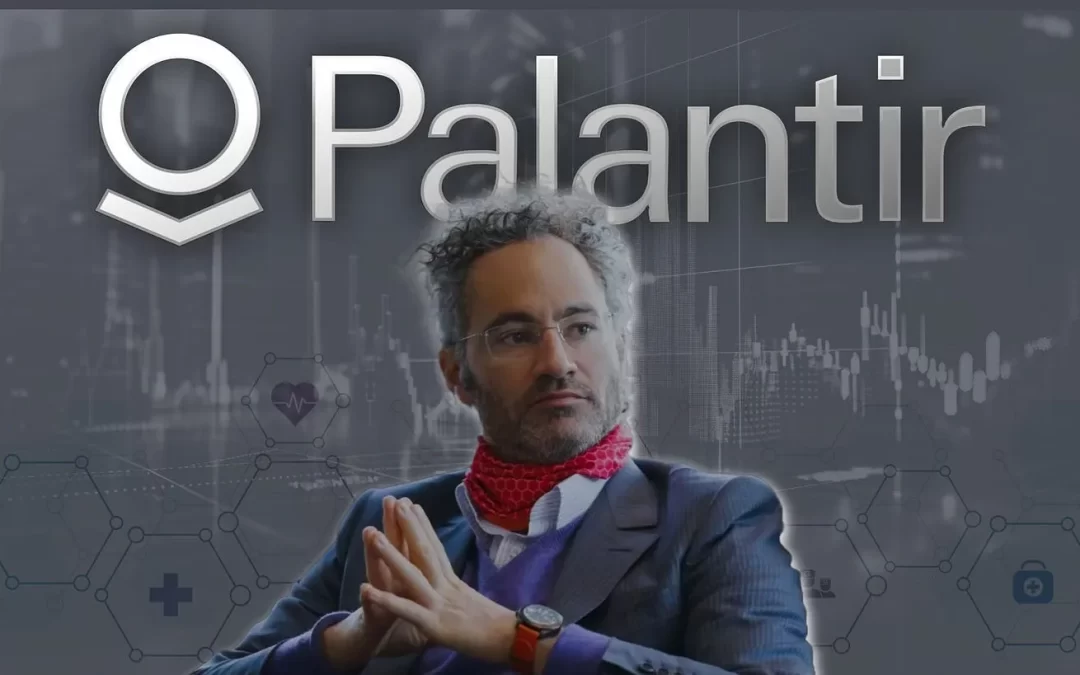
Today in the United States, the bullet is gone, but the fake smile remains. It is baked into machine learning artificial intelligence models. It’s coded into patient risk scores and medical benefit algorithms. It is scrubbed clean of overt bias but retains all the effectiveness of state-sanctioned exclusion. The site of this quiet cruelty? America’s healthcare system. And behind this new apartheid, neat, silent, and sanctioned, is the shadow of Palantir Technologies. This is the company that wants to map the world, and through online data tracking is already mapping you.
Founded by Peter Thiel, Palantir has sold its services to ICE, the Pentagon, and countless private health insurers and hospital systems. It markets “prediction” and “prevention,” but what it offers is profiling. It claims to fight fraud and waste, but in reality, it targets statistical deviance with a religious fervor. The goal? Control without fingerprints. Classification without context. Sorting the worthy human beings from the unworthy human beings with the sanctified neutrality of numbers.
Healthcare apartheid in the United States is no longer built on waiting rooms and ZIP codes alone. It’s algorithmic. An artificial intelligence predictive model may decide you’re a drug seeker, a misuse risk, or a burden. It doesn’t tell you this. It just tells the pharmacy to deny your medication. It tells your insurer to flag your file. It tells your doctor, quietly, through alerts and scores, that you’re not worth the fight. And the best part? No one has to be the bad guy. Not the insurer. Not the prescriber. Not the politician. Palantir’s machine did it.
Peter Thiel’s 1995 book, The Diversity Myth, co-authored with David Sacks, served as the “intellectual seedbed” for his mature worldview. Stemming from the “culture wars” at Stanford University, the book critiqued the shift toward multiculturalism in the curriculum, framing it as an attack on Western civilization, a symptom of institutional decay, and a threat to intellectual life. Thiel and Sacks argued that the focus on “diversity” created a “culture of victimization” and a “stifling conformity,” transforming a local campus dispute into a battle for civilization itself. This early work established the key themes of decline, institutional failure, and the equation of progressive politics with a totalitarian impulse that would define Thiel’s later philosophy.
The foundational ideas in The Diversity Myth broadened into a comprehensive indictment of the modern liberal order, unified by Thiel’s “Great Stagnation” thesis. This theory posits that Western society has experienced a dangerous slowdown in technological and scientific progress since the 1970s, which Thiel blames on a “center-left establishment” and the “decadent distraction” of culture wars. This diagnosis justifies his radical conclusions, including his rejection of democratic politics, which he believes are structurally incapable of fostering the long-term innovation needed to reverse decline. His proposed solution is to abandon these broken systems in favor of a “post-liberal order” led by “heroic founder-entrepreneurs” or “founder-kings” who can force progress, a vision seen as a direct evolution from his initial grievances at Stanford.
Thiel’s philosophy contains numerous controversial and anti-egalitarian elements. In his 2009 essay, “The Education of a Libertarian,” he famously declared, “I no longer believe that freedom and democracy are compatible,” attributing this to the “vast increase in welfare beneficiaries” and “the extension of the franchise to women.” His worldview is described as a “Manichean and eschatological vision,” viewing modern society as nearing “apocalyptic collapse” and a literal battleground between good and evil. This has led him to make inflammatory statements, such as comparing the United Nations to the “antichrist.” His rejection of mainstream scientific consensus that requires collective action, such as on climate change, and his dismissal of activists like Greta Thunberg, further underscore his contrarian stance. As a “political kingmaker,” he has become a central figure in the “New Right,” seeking to push American politics in a more “reactionary direction.”
Thiel’s disdain for liberal institutions is now fully realized in Palantir’s computer architecture. This is not a company interested in building systems for justice or care. It builds systems to optimize. And optimization, in this worldview, means stripping away human subjectivity in favor of mathematical hierarchy. To Thiel, compassion is inefficiency. Democracy is drag. Affordable healthcare as a human right is heresy.
The result is an America where digital apartheid flourishes in the name of efficiency. Where being Black, Indian, poor, disabled, or chronically ill becomes a data point of suspicion. Where risk scores mimic redlining. Where pain becomes a metric to be doubted. Where Medicaid recipients are labeled burdens, not patients. Where the Government’s artificial intelligence algorithms will see you now, and maybe, if you’re lucky, it won’t.
This isn’t speculative fiction. It’s already happening. Predictive analytics tools like NarxCare generate “risk scores” on patients seeking controlled substances, even if they’ve never misused a drug. Machine learning models flag patients for “opioid misuse risk” and subtly influence prescribers through digital nudges. And Palantir, with its contracts in everything from defense to public health, is uniquely poised to centralize these decisions in one unaccountable system. This is District 9 by way of Silicon Valley. Except now, the aliens aren’t the outsiders. They’re us!
Unfortunately, the new class of undesirables is not extraterrestrial but terrestrial. Disabled veterans labeled “addicts,” sickle cell patients flagged as “frequent flyers,” working-class mothers refused pain relief after cesareans. They don’t live in shantytown, they just live under the shadow of a Government artificial intelligence algorithm.
American Apartheid enforced through AI, with the Butlerians (those who resist AI rule) set against the Palantirians (those who weaponize it)
And like in District Six, the lines of segregation are drawn with a pen or in this case, computer code. This techno-political experiment didn’t begin with AI, but AI gave it teeth. Palantir didn’t invent healthcare discrimination through its healthcare algorithms. It just turned it into a scalable, exportable product for In-Q-Tel (IQT) which is a unique, not-for-profit strategic investor that serves as a bridge between the U.S. government intelligence and defense communities and the dynamic world of innovation and technology development. Founded by the CIA in 1999, it leverages government funding to invest in companies developing cutting-edge technologies relevant to national security needs.
IQT aims to anticipate technological challenges, provide expertise, and accelerate the adoption of groundbreaking innovations for national security and the prosperity of the U.S. and its allies. By partnering with startups and the venture capital community, IQT helps government agencies stay ahead of evolving threats and efficiently utilize emerging technologies without solely relying on expensive, in-house development. While generally seen as a successful model for public-private collaboration, IQT has faced criticism, particularly regarding potential conflicts of interest among its board members and concerns about the ethical implications of government-sponsored investments in private companies, especially those with international operations. Despite these concerns, IQT continues to play a vital role in identifying, evaluating, and leveraging emerging technologies to support the U.S. national security community.
This is the dream Peter Thiel has chased since his Stanford days, where he and David Sacks wrote The Diversity Myth, a blistering takedown of multiculturalism that framed campus equity movements as the canary in the coal mine of civilizational collapse. What masqueraded as an academic debate was, in fact, a dry run for Thiel’s ideological campaign against democracy itself. Thiel then apprenticed at Sullivan & Cromwell which has a long and sometimes controversial history, marked by instances like aiding Nazi Germany’s arms buildup, involvement in the 1954 Guatemala coup d’état, and for its role in the FTX cryptocurrency exchange collapse. These historic acts influenced Thiel who later declared that “freedom and democracy are not compatible.” Thiel wasn’t being provocative, he was issuing a design brief. Meanwhile, Thiel distracts the masses with what he now calls “divertissement.” At the Oxford Union in 2023, he described the DEI culture wars as a magician’s trick, flashy, silly, and designed to pull attention away from more pressing, “evil” problems. But that’s the point. While America argues over pronouns and statues, Palantir builds the digital infrastructure of exclusion for our Government.
This is the great sleight of hand: criticize DEI as a distraction, while quietly constructing a system that operationalizes discrimination. In the end, the same logic that justified bulldozing District Six now powers our AI digital systems. The same feigned civility that asked aliens to sign eviction notices in District 9 now asks us to “verify our identity,” “accept terms,” or “consent to monitoring.”
But here’s the truth, you cannot consent to an apartheid you don’t even see. Peter Thiel may believe that “founder-kings” should govern the future, but in American healthcare, those kings are building a world where only the predictable survive, and only the privileged thrive. So yes, the Government’s AI algorithm will see you now. And it’s smiling!
Dr. Anand received an honorable discharge from the U.S. Navy where he utilized regional anesthesia and pain management to treat soldiers injured in combat at Walter Reed Hospital. The Author is passionate about medical research and biotechnological innovation in the fields of 3D printing, tissue engineering and regenerative medicine.
Dr. Anand was convicted through gross government misconduct and is now serving a 14 year sentence in prison. He will still be contributing articles to Doctorsofcourage to help with the mission to get the CSA repealed and all doctors expunged of their convictions, back in practice, and pain management restored.

Trackbacks/Pingbacks