
We MUST, and WILL get the Controlled Substance Act repealed. No drug causes addiction. The CSA has been a 50 year old attack on minorities, now turned against doctors and the expendable patients they treat. Weaponization of the Justice Department for government agendas has got to end. Join us in this achievement. Nothing else will work to end the war–not state laws, not Supreme Court decisions, not the CDC guidelines. Only ending the war on drugs will end the attacks on doctors and pain patients.
 Doctors and Patients of Courage
Our Mission
Understand that our goal, the repeal of the Controlled Substance Act, is obtainable and necessary. No drug is the cause of addiction. The history of the creation of laws against drugs shows that the motive was purely racist to disenfranchise Blacks and Orientals, as well as the establishment of the United States as a world power. Since then it has simply become a funnel for the prison systems, job security and promotion access for the US Attorneys, and a means of government genocide of the expendable populations. Prohibition shows the worthlessness of laws against personal choices.
Legalized Extortion
By Angela Greene
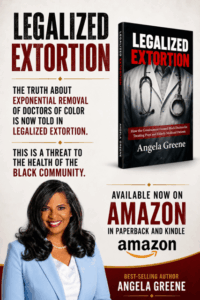
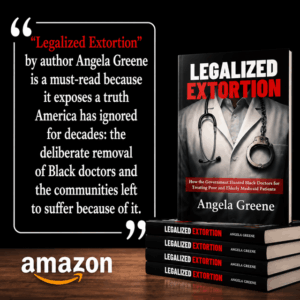 Available today on Amazon HERE, Angela has written an amazing account showing how the Controlled Substance Act is being used to attack minority medical professionals at a higher percentage than white, male professionals. Since these dedicated individuals often serve the underprivileged communities, when they are attacked, the communities suffer as well. This is part of the government agenda that we, on Doctorsofcourage.org, have been exposing now for 10 years. It must end. We must stop being a country that chases the money, committing legal genocide against the 5 categories of expendable populations–the Medicare/Medicaid, uninsured, poor, elderly, and minority.
Get your copy of this book, read it, educate your legislators, and help get the CSA repealed. Click on the picture or HERE.
Repeal the Controlled Substance Act
We must achieve freedom for all incarcerated medical professionals, illegally convicted through gross government misconduct, forced perjury, and lying expert witnesses based on government propaganda against drugs. We must restore medicine to the governance of medical experts, not government. We must restore proper treatment to patients with pain of any kind–acute or chronic.
Our mission here is to get the Controlled Substance Act repealed. This can only be done through Congressional legislation. So it is imperative that everyone learn the truth about the War on Drugs, Doctors, and Pain Patients, and spread the truth, especially to the legislators. To that end, we have the Communication page for accessibility to all legislators and Executive offices.
So please, learn, accept the goal, and help us achieve it so that all medical professionals are free to work again, helping patients find a quality of life they’ve lost due to government creating crime where there isn’t through propaganda against opioids.
Watch the webinar recording to learn the history of the propaganda against drugs, and how opioids became the government target–“Go where the money is and the guns aren’t.”
Reasons for Repealing the Controlled Substance Act
In the toggles listed below is the information from the posts explaining all of the reasons why the war on drugs is an abject failure and needs to end. The final toggle is how we can go about getting the CSA repealed. These topics are not in any order. They are all important, but to each individual, one might be more important than the others. Just learn all of them to give you the cards to play to the legislators. Then join our communication campaign
Personal Liberty
How the Controlled Substances Act Attacks Personal Liberty — and Why It Must Be Repealed
When the U.S. Congress passed the Controlled Substances Act (CSA) of 1970, it did so in the name of public health and safety. The law’s stated purpose was to curtail the abuse of narcotics and to protect Americans from the dangers of addiction. Yet, half a century later, the CSA’s legacy is not one of health or safety — but of repression, mass incarceration, corruption, and militarized policing.
The CSA has become the legal backbone of the so-called War on Drugs, a campaign that has criminalized millions, eroded constitutional rights, and empowered the state to intrude upon private life in ways the Founders would have found intolerable. To preserve personal liberty and restore justice, this failed framework must be repealed — not “reformed,” not tweaked, but dismantled entirely.
The Origins of a Legal Catastrophe
The Controlled Substances Act consolidated earlier anti-drug laws into a single federal system that classified drugs into “schedules.” This hierarchical model — still used today — was supposed to reflect medical utility and potential for abuse. Yet, from its inception, the CSA rested more on politics and moral panic than science.
Marijuana, for example, was classified as a Schedule I substance — supposedly as dangerous as heroin — despite the absence of evidence that it posed such health risks. Later declassified Nixon White House recordings revealed that the CSA was weaponized deliberately. The administration sought to undermine antiwar and Black activists, groups associated in the public imagination with drug use. As Nixon adviser John Ehrlichman admitted, “We could arrest their leaders… vilify them night after night on the evening news.” The CSA’s intent was not medical regulation; it was social control.
This alignment of pharmacology with politics transformed what had once been a medical or moral debate into a criminal one, laying the foundation for decades of state overreach.
A War on People, Not Drugs
The U.S. Department of Justice itself tacitly acknowledged the failure of this drug war in the 1990 report Beyond the War on Drugs: Overcoming a Failed Public Policy. That study concluded that supply-side enforcement, police raids, and interdiction had achieved no lasting decrease in drug availability. Instead, these measures produced a cycle of violence, corruption, and human suffering, while ignoring the social realities that drive drug use in every culture.
The report argued — radically for its time — that drug use “responds to universal human needs” and that policy should view individuals as exercising personal liberty rather than as victims or criminals. Unfortunately, this reasoning never guided national policy. Instead, the CSA entrenched an enforcement apparatus now so vast and interconnected that it seems to have taken on a life of its own.
The Erosion of Rights and Freedom
By criminalizing private consumption among consenting adults, the CSA undermines the most basic principles of a free society. The Alternative World Drug Report (Count the Costs Initiative, 2011) outlined how prohibition regimes violate international human rights norms. These violations are not theoretical; they are visible daily in American life.
Among the rights most directly assaulted by the CSA and its enforcement are:
- Right to privacy and bodily autonomy: The government dictates what adults may ingest, even within their own homes, with no direct harm to others.
- Right to due process: Civil asset forfeiture, a product of drug policy, allows law enforcement to seize property without criminal conviction, reversing the presumption of innocence.
- Right to liberty and proportional justice: Possession-related sentences remain severe, contributing to the mass incarceration of nonviolent offenders.
The Department of Justice’s civil forfeiture program, for instance, generates billions annually. Police can confiscate cars, homes, or cash merely suspected of connection to drugs — often never returning them, even when no charges are filed. The incentive is perverse: seized assets feed back into agency budgets, granting police departments a direct financial interest in property seizures. This machinery reflects not law but legalized looting.
The Police State We Built
The War on Drugs — born under the CSA — also blurred the essential line between civil policing and military force. Historically, America prided itself on maintaining that divide. Yet the drug war normalized the use of SWAT teams, no-knock raids, and paramilitary tactics against civilians. And now it is being used as an excuse to invade other countries and violate their citizens’ right to life.
In the early 1980s, only about 20 percent of small towns had SWAT teams. By the 2000s, over 80 percent did. Today, U.S. police departments conduct tens of thousands of no-knock raids annually, many for minor drug offenses. Innocent people — including children — have been killed in their homes by police acting under the legal authority derived from the CSA.
This militarization represents an inversion of constitutional priorities: security forces designed for outward defense are now pointed inward, treating citizens as internal enemies in a perpetual domestic war.
In this sense, the CSA’s attack on liberty transcends drug regulation; it recasts the relationship between citizen and state. The government no longer merely enforces laws — it occupies communities.
The Cost in Human Lives
The CSA’s reach extends deep into American communities, extracting a heavy social toll. Its enforcement disproportionately targets poor neighborhoods and racial minorities. Despite similar rates of drug use across racial lines, Black Americans were almost four times as likely to be arrested for marijuana possession.
Once arrested, defendants often face mandatory minimum sentences that destroy families and futures for what should be victimless crimes. The stigma of conviction strips individuals of job opportunities, voting rights, and housing access. These penalties perpetuate cycles of poverty and alienation that contribute to — rather than prevent — substance abuse.
The same punitive ethos extends internationally, where U.S. drug policy has aided violent interdiction campaigns in Latin America and Southeast Asia. The United Nations’ own data show that these militarized strategies have empowered organized crime while destabilizing governments. As former Brazilian President Fernando Henrique Cardoso observed, the “war on drugs” has devastated human lives and eroded democracy worldwide.
Corruption as Policy
When vast profits meet opaque enforcement power, corruption becomes inevitable. From border patrol agents bribed by traffickers to prison guards smuggling drugs into penal institutions, prohibition breeds misconduct at every level of law enforcement. The CSA fuels these black markets by ensuring that valuable substances — which could be regulated, taxed, and tested — remain in criminal hands.
Moreover, the bureaucratic empire sustained by the CSA — the DEA, ONDCP, and interconnected agencies — consumes immense public resources. Billions spent annually on enforcement could instead support harm reduction, education, and voluntary treatment. The moral irony is plain: in the name of protecting the public, the CSA institutionalizes both criminality and cruelty.
Reclaiming Responsibility and Freedom
Critics often frame drug legalization or decriminalization as “surrender.” In reality, repeal of the CSA would mark a return to personal responsibility. Adults already make daily choices about health and risk — through alcohol, caffeine, tobacco, fast food, and countless prescription drugs. The law should respond not by coercion but by fostering honest education, regulation, and compassion.
A post-CSA framework could treat drug use as a matter of public health and personal conscience, not criminality. It would empower doctors rather than bureaucrats, and families rather than police. It could draw from proven models such as Portugal’s decriminalization system, where drug-related deaths and HIV transmission rates fell dramatically after punitive laws were repealed.
Such reform would also realign American governance with its founding principles. Liberty, as defined in the Declaration of Independence, entails the pursuit of happiness — a concept broad enough to encompass sovereignty over one’s own body and mind. A state that imprisons citizens for inward acts of consciousness no longer upholds liberty; it negates it.
The Moral Imperative of Repeal
Repealing the Controlled Substances Act will not instantly resolve the complex realities of addiction or social inequality. But it would remove the legal fiction that coercion cures dependency. It would end a century-long experiment in prohibition that has failed by every conceivable measure: failing to reduce demand, failing to protect health, and failing to preserve justice.
The real addiction exposed by the CSA is not chemical but political — an addiction to power, control, and the moral vanity of punishment. Breaking that addiction begins with acknowledging its cost: millions of lost lives, wasted dollars, and freedoms surrendered.
America can no longer afford a “war” on its own citizens. The Controlled Substances Act must be remembered as what it is — an attack on personal liberty disguised as public virtue — and repealed so that reason and compassion can finally replace fear and coercion.
Economic Impact
How Repealing the Controlled Substances Act Would Revitalize the U.S. and Global Economy
Few federal laws have shaped modern society as profoundly as the Controlled Substances Act (CSA) of 1970. Conceived at the height of the Nixon administration’s “War on Drugs,” it classified hundreds of natural and synthetic substances into rigid schedules and centralized drug regulation under federal authority. What began as an attempt to control addiction evolved into a monumental force of criminalization that has cost trillions of dollars, destabilized global markets, worsened poverty, and entrenched racial inequities.
Repealing the CSA entirely would not only dismantle a failed policy—it would open the door to economic growth, new industries, and social reintegration for millions of people. The ripple effects of ending this costly legal regime would extend far beyond American borders, improving economic stability and justice worldwide.
The Economic Toll of Criminalization
The War on Drugs has functioned as an economic drag on the United States for over five decades. Federal and state governments spend tens of billions annually on substance-related policing, prosecution, and incarceration. The American Civil Liberties Union estimates that enforcing drug prohibition costs taxpayers more than $47 billion each year, while the broader costs of incarceration, court expenses, and lost labor productivity may exceed $100 billion annually.
This massive allocation of resources yields little return: despite heavy enforcement spending, drug availability and use remain largely unchanged. Economically, this is the definition of an inefficient market—one where governmental intervention generates costly distortions without producing measurable social benefit.
Repealing the CSA would end this fiscal sinkhole. Instead of funneling public funds into enforcement and mass incarceration, the U.S. could redirect resources toward addiction treatment, prevention, and economic reintegration. These health-based strategies have proven far more cost-effective. For example, studies of harm-reduction programs show a return of up to $7 in social benefit for every $1 spent, largely through reduced healthcare burdens, improved productivity, and lower crime rates.
Reclaiming the Workforce and Expanding Opportunity
One of the CSA’s most corrosive legacies lies in its impact on human potential. Millions of Americans—disproportionately from Black and Latino communities—carry criminal records for nonviolent drug offenses. These convictions create lifelong barriers to employment, education, housing, and healthcare. People with a felony record are estimated to lose more than $500,000 in lifetime earnings, and the aggregate wage loss across formerly incarcerated populations reduces U.S. GDP by nearly $80 billion each year.
Repealing the Controlled Substances Act, combined with record expungement and restoration of civil rights, would reintegrate millions into the legitimate economy. This reintegration would expand the workforce and increase tax revenue while reducing welfare costs associated with unemployment and recidivism. When individuals are allowed to rejoin the labor market fully, they contribute to entrepreneurship, consumption, and community stability—key ingredients for economic growth.
Furthermore, repealing the CSA would eliminate federal restrictions that currently bar those with drug convictions from public assistance programs such as SNAP and TANF. The policy of denying food and income aid to people struggling to rebuild after incarceration only deepens cycles of poverty. Lifting these barriers would not be a handout but an investment—allowing affected individuals to stabilize their lives and transition back into productive roles in society.
Industry Growth and Agricultural Renewal
Legalization and regulation of currently banned substances would create multiple new markets—healthcare, pharmaceutical, agricultural, and energy-related industries—that could generate hundreds of billions in legitimate revenue.
The cannabis sector already provides a glimpse of this potential. States with legal marijuana have seen billions in sales, tens of thousands of new jobs, and substantial tax inflows for public programs. Broader chemical, botanical, and psychedelic industries could follow similar pathways under evidence-based regulation. By replacing criminal supply chains with licensed, taxed industries, repeal would transfer massive profits from cartels to legitimate economies and local entrepreneurs.
Rural America, in particular, could benefit immensely. Many mid-western and southern communities devastated by declining manufacturing or monocrop farming could find economic renewal through diversified, legal production of plant-based substances such as cannabis, coca derivatives (for medical or nutritional use), and industrial hemp. These sectors would foster sustainable farming, biomanufacturing, and research jobs, infusing stagnant regions with new opportunity.
Global Economic Transformation
The effects of the CSA have never been confined to U.S. borders. Its global enforcement model—imposed through international treaties and trade pressure—has militarized rural economies from Latin America to Southeast Asia. Farmers in coca, opium poppy, and cannabis-producing regions face crop eradication campaigns that destroy livelihoods and displace entire communities. These policies have not eradicated drugs; instead, they have created black markets, corrupted governments, and fueled armed conflict.
Repealing the CSA would allow the United States—the original architect of the global prohibition regime—to lead in reshaping international trade and agricultural policy. A post-prohibition framework could integrate small farmers into lawful global markets, providing fair compensation and stability rather than treating them as collateral damage in an unwinnable war.
Countries like Colombia and Afghanistan could shift from dependence on illicit cultivation toward regulated production, manufacturing, or diversified agriculture. This would strengthen national economies, reduce the appeal of cartel employment, and improve trade relations. As illicit profits dry up, violence and migration pressures would likely decrease, producing economic benefits regionally and globally.
Repairing Structural Inequities
Drug enforcement has long exaggerated America’s racial and class divides. Even after modest sentencing reforms, discretionary policing and prosecution maintain disparities: Black Americans remain over three times more likely than whites to be arrested for drug possession, despite similar rates of use. These disparities are not incidental—they represent structural racism embedded in the enforcement of the CSA. Every arrest and conviction compounds social disadvantage by excluding individuals from jobs, housing, and education.
The result is a self-perpetuating cycle: lost income, broken families, and diminished economic mobility for entire neighborhoods. Children growing up in communities heavily targeted by drug policing face higher dropout rates and reduced lifetime earnings—a generational loss of productivity that undermines national competitiveness.
By repealing the CSA and ending federal criminalization, the U.S. could dismantle one of the most enduring drivers of economic inequality. Restoring access to education, professional licensing, and financial aid would transform millions of families’ futures. Economically, this represents a long-term investment in human capital, similar in scale to past initiatives like the GI Bill—but directed at historically excluded populations.
A Healthier, More Efficient Economy
Evidence shows that substance misuse is best addressed through healthcare, not law enforcement. Portugal’s decriminalization model, implemented in 2001, demonstrates that treating addiction as a public health issue reduces overdoses, HIV transmission, and incarceration while saving significant public funds. The U.S. could follow suit—with far greater economic impact given its scale.
Repealing the CSA would enable comprehensive integration of harm reduction and treatment services into public health systems. This shift would reduce emergency healthcare costs and workforce absenteeism while promoting long-term recovery and productivity. Rather than fighting a self-made war, America could redirect its immense enforcement resources toward economic revitalization and mental health infrastructure—areas with tangible, measurable returns.
Reimagining the Future
The Controlled Substances Act was born of fear and moral panic, not sound economics or evidence-based policy. Its repeal would mark a turning point—an embrace of pragmatic, humane governance that values outcome over ideology.
Economically speaking, repeal would:
- Reduce government spending by tens of billions annually.
- Expand the workforce by removing barriers to employment.
- Create thriving new industries and tax revenues.
- Revitalize rural economies through regulated agricultural production.
- Foster global stability by replacing illicit trade with lawful commerce.
- Correct structural injustices that have suppressed economic mobility for generations.
Like the repeal of alcohol prohibition nearly a century ago, ending the CSA would unleash innovation, entrepreneurship, and social healing. The War on Drugs has too long drained American prosperity into policing and prisons. Economic recovery—true, inclusive recovery—requires abandoning this failed experiment and reimagining a world where policy supports opportunity, not punishment.
Effects on Public Health
War on Drugs-Public Health
Repealing the Controlled Substances Act: How Ending the War on Drugs Would Improve Public Health
For over fifty years, U.S. drug policy has been dominated by the Controlled Substances Act (CSA) of 1970—legislation that created the legal framework for the “War on Drugs.” The result has been catastrophic not only for civil liberties and racial justice, but also for public health. The evidence from decades of enforcement shows a consistent pattern: criminalizing drug use increases disease transmission, overdose deaths, and social harm. Repealing the CSA would not mean ignoring addiction. Rather, it would mean treating substance use as the health issue it truly is—guided by medical science, compassion, and evidence-based harm reduction.
Criminalization and Its Health Consequences
Aggressive drug enforcement has undermined harm reduction and treatment more effectively than it has ever curtailed drug use. Studies show that when people fear arrest, they delay or avoid seeking help during overdoses or medical emergencies. This fear-driven hesitation directly contributes to preventable deaths from substances like opioids and methamphetamine.
Law enforcement approaches also shape drug markets in unhealthy ways. When supply is restricted, traffickers favor compact, high-potency drugs that yield greater profit and are easier to conceal. This dynamic birthed the fentanyl crisis. Fentanyl—up to 50 times stronger than heroin—was involved in two-thirds of U.S. overdose deaths in 2021. The “War on Drugs” didn’t eliminate heroin; it incentivized an even deadlier substitute.
The Centers for Disease Control and Prevention (CDC) reports that U.S. overdose deaths reached 93,000 in 2020, 108,000 in 2021, and roughly 110,500 in 2022—record highs every year. By contrast, many nations that emphasize decriminalization and public health, such as Portugal, have seen steep declines in overdose fatalities, HIV infections, and drug-related incarceration.
The Link Between Drug Laws and Infectious Disease
One of the gravest public health legacies of drug criminalization is its role in spreading blood-borne disease. The United Nations Office on Drugs and Crime (UNODC) has acknowledged that policies outlawing syringe programs or punishing possession of sterile needles drive people underground, pushing them toward unsafe injection practices.
Around the world, and especially in U.S. prisons, HIV rates among incarcerated people are several times higher than in the general population. According to UNODC estimates, as many as one-quarter of all HIV-positive Americans pass through correctional facilities each year. Behind bars, barriers to clean injection equipment, insufficient access to condoms, and interruptions in antiretroviral therapy create a perfect storm of transmission risk.
The same criminal logic that bans syringe programs has also limited access to life-saving treatments. In several countries, opiate substitution therapy—using medications like methadone or buprenorphine—remains illegal. Yet these therapies are among the most rigorously studied and effective treatments for opioid dependence, drastically reducing both illicit use and mortality.
As Yuri Fedotov, then Executive Director of the UNODC, stated in 2010: “Drug dependency is a health disorder, and drug users need humane and effective treatment – not punishment.” Repealing the Controlled Substances Act would allow nations, states, and communities to pursue this humane path free from federal interference.
Social Determinants of Health and the Drug War
Public health experts increasingly recognize that social determinants—housing, employment, discrimination, and healthcare access—shape who gets sick and who recovers. The Annals of Medicine (Cohen et al., 2022) found that punitive drug laws worsen these determinants far beyond the criminal legal system. Arrest records reduce job opportunities, eviction risks rise, family stability erodes, and mental health deteriorates. These are not “side effects” of the CSA; they are built into its design, which criminalizes the conditions of illness instead of addressing their roots.
For example, forcing individuals seeking addiction treatment to register in government databases, as occurs in countries like China, deters care and exposes people to ongoing surveillance and humiliation. In the U.S., fear of losing custody of children, housing, or employment often keeps people from seeking medication-assisted treatment or detox services. Criminalization doesn’t remove drugs—it removes people from healthcare, obscuring them in a stigma-driven shadow system.
Historical Lessons: A Failed Public Policy
Even insiders within the justice system recognized the futility of the War on Drugs decades ago. In 1990, a Justice Department–funded report, Beyond the War on Drugs: Overcoming a Failed Public Policy, argued that supply-side enforcement was “futile,” based on “questionable views of addiction,” and should be replaced by policies rooted in human behavior and personal responsibility. Its conclusion was prophetic: even if interdiction could reduce drug imports, human demand would adapt, because psychoactive substance use fulfills universal psychological and cultural needs.
That report is no longer available for public download, but its message remains urgent—law enforcement cannot solve what are fundamentally public health challenges.
The Costs of Prohibition: Disease, Overdose, and Human Rights
The Alternative World Drug Report (UNODC, 2011) summarized the global toll of prohibition: empowered cartels, destabilized governments, violated human rights, and widespread preventable deaths. Its findings are striking:
- Criminalization undermines prevention and harm reduction by stigmatizing those who most need help.
- Prohibition encourages high-risk behaviors, including injecting in unsafe environments without access to sterile equipment.
- Enforcement pressures lead to stronger, deadlier drug formulations, such as fentanyl and “designer” synthetics.
- Illegally produced drugs vary wildly in strength and purity, raising the risk of overdose or poisoning.
- Prisons amplify infectious disease transmission while offering inadequate healthcare.
This report also noted an overlooked tragedy: the “drug war” has chilled legitimate medical pain relief. Over five billion people worldwide have little or no access to opiates for palliative care. The same laws meant to prevent misuse deny millions dignity in illness.
As UN High Commissioner for Human Rights Navanethem Pillay declared in 2009, “Individuals who use drugs do not forfeit their human rights.” Repealing the Controlled Substances Act would reaffirm those rights, aligning U.S. law with global human rights norms instead of violating them.
The Overdose Epidemic: A Policy-Driven Crisis
Drug prohibition has made drug poisoning one of the leading causes of preventable death in the United States. CDC data show the overdose death rate rose from just over one per 100,000 people in 1971 to more than 14 per 100,000 by 2014, and even higher today. The Cato Institute notes that between 2000 and 2014, drug overdose deaths surpassed motor vehicle fatalities for the first time in history.
What connects these grim statistics is not moral weakness but policy design. By criminalizing safe supply, the CSA leaves users to navigate markets with no quality control, no labeling, and no purity testing—conditions unthinkable for any other consumer product. Programs that provide regulated, pharmaceutical-grade substances—such as supervised injection sites or medical heroin maintenance in Switzerland, Portugal, and Canada—demonstrate that when safety replaces secrecy, fatalities plummet.
A Path Forward: Health, Not Warfare
Repealing the Controlled Substances Act would not automatically solve every drug-related problem, but it would remove the largest legal and political obstacles to rational health policy. A post-CSA framework could:
- Decriminalize possession and prioritize harm reduction, following Portugal’s example.
- Redirect federal resources toward evidence-based treatment, community recovery centers, and medication-assisted therapy.
- Implement safe supply models ensuring potency transparency and contamination control.
- Expand access to syringe services, naloxone distribution, and overdose prevention education.
- Support robust research into drug pharmacology, mental health, and social determinants free from political interference.
These measures would save lives and rebuild trust in health institutions long undermined by punitive policing. More fundamentally, they would acknowledge that moral worth is not determined by chemical consumption and that treatment, not punishment, is the compassionate and pragmatic response.
Conclusion: From War to Wellness
Half a century after declaring the War on Drugs, America faces its deadliest overdose epidemic and its most fractured public health landscape. Evidence from the CDC, UN, Open Society Foundations, and medical journals all converge on one conclusion: criminalization has not protected health—it has destroyed it.
Healthcare Costs
Repealing the Controlled Substances Act (CSA) and legalizing all drugs would cut U.S. healthcare costs by lowering insurance premiums, reducing expensive crisis care, and replacing the “drug war” model with evidence-based health care and safer, cheaper medicines.
Evidence from medical cannabis
States with medical cannabis laws see large, sustained reductions in individual-market health insurance premiums—about 1,600 dollars per person per year seven to nine years after implementation, compared with similar non-legal states.
New employer-plan analyses find premiums in medical cannabis states are about 3.4% lower, saving roughly 238 dollars per employee annually and projecting up to 29 billion dollars in yearly national savings if all states adopted medical programs.
These savings arise because medical cannabis broadens treatment options for pain, mental health, and nausea, substitutes for more dangerous prescription drugs, and lowers crime, hospitalizations, and substance use treatment needs.
How legalization lowers health system use
Substance use disorders now drive heavy use of high-cost care—hospitalizations, emergency visits, and recurrent readmissions—especially for illicit drugs, with per-person hospital costs for some illicit drug disorders exceeding 2,700 dollars annually.
Research shows moderate marijuana users have equal or lower hospitalization odds than abstainers, while the real cost burden concentrates in people with untreated or criminalized use of other illicit drugs, who face more frequent and longer hospital stays.
Legalizing and declassifying all drugs shifts resources from policing and incarceration into early screening, outpatient care, and treatment, which prevents crises instead of paying repeatedly for overdoses, infections, trauma, and readmissions.
Direct savings for patients and payers
When drugs are tightly scheduled, many patients must attend frequent office visits just to renew prescriptions (for ADHD medications, controlled pain medicines, or anxiety drugs), adding hundreds to thousands of dollars per year in visit charges and time costs. Legal access with fewer regulatory hurdles lets stable patients safely maintain therapy with fewer mandatory visits, freeing clinician time for prevention and complex care.
Legal access to alternatives reduces demand for costly prescription drugs across Medicaid and other payers. Prescriptions for pain, sleep, anxiety, seizures, and related conditions fall after recreational or medical cannabis access expands.
As aggregate medical spending drops (fewer hospitalizations, fewer prescriptions, fewer specialist visits), insurers lower premiums for everyone, not only drug users, because community rating spreads the savings across the entire risk pool.
From prohibition costs to health solutions
Health insurance premiums already account for the majority of household health spending, and national healthcare costs are rising faster than wages; even small percentage reductions in utilization translate into billions in savings.
The drug war model adds its own costs: criminal records that block employment and insurance, policing and incarceration that do nothing to treat addiction, and administrative surveillance (paper scripts, urine tests, prior authorizations) that consume provider time and drive billing overhead.
A health-centered framework—full drug legalization, repeal of the CSA, and integration of substance use care into primary care—removes many of these structural inefficiencies, replaces crisis-driven care with prevention and maintenance, and uses safer, cheaper medications where possible. The medical cannabis evidence shows that when even one formerly prohibited drug is normalized as a treatment option, health insurance premiums and system-wide costs fall; extending that logic to all drugs multiplies those savings while finally prioritizing health solutions over a failed drug war.
Social Impact
We must end the War on Drugs. To do that, the Controlled Substance Act and all related laws must be repealed and all drugs must be legalized. Even government officials are starting to recognize that fact, they just aren’t acting on it. Why? They are missing the most important reason—what I teach—that drugs are not the cause of addiction. So we have to get that information to them. Instead of griping and complaining, people need to learn the truth, and then share it. The focus now for me and Doctors of Courage is to share with you the facts of the effects of the War on Drugs, so you can effectively present to others why we need to repeal the CSA.
This post will be the first explaining the effects of the War on Drugs on the social aspects of the country. This is only the beginning. There will be more. Be sure and read them all as I present them, and share.
The War on Drugs has profoundly shaped the social landscape of America, perpetuating cycles of poverty, fueling racial and economic inequality, and transforming the criminal justice system in lasting, deeply harmful ways.
Exacerbating Inequality
Far from alleviating poverty or delivering justice, the War on Drugs has acted as a catalyst for deeper social divides. Policies that prioritize punishment over treatment have disproportionately targeted Black and Latino communities, leading to mass incarceration and the disruption of families, livelihoods, and access to health and social services. The original intent, revealed by insiders such as President Nixon’s aide John Ehrlichman, was not simply to curb drug use but to suppress political opposition and communities of color. Over fifty years, the result has been a dramatic growth in the prison population, with people of color suffering the brunt of punitive practices, lengthy sentences, and overt policing.
Racial Targeting and Mass Incarceration
The racial bias built into drug law enforcement is evident throughout the spectrum of arrests, convictions, and sentencing. The infamous 100-to-1 sentencing disparity between crack and powder cocaine, and practices like racial profiling, led to exponential increases in arrests and convictions of Black youths, while arrest rates for White youths fell. Despite similar rates of drug use, Black Americans have been and continue to be imprisoned at far higher rates, often for nonviolent offenses. Even as some reforms have lowered sentencing disparities, racial gaps in arrests and drug convictions persist, with Black people consistently more likely than Whites to be arrested for marijuana possession and other drug crimes.
Erosion of Constitutional Protections
The War on Drugs ushered in aggressive policing tactics such as stop-and-frisk and widespread use of SWAT teams, disproportionately targeting minority neighborhoods and undermining constitutional rights. Judicial rulings and legislation weakened the Fourth Amendment, allowing officers to subject civilians to stops, searches, and humiliation with little oversight. These encounters often became sources of psychological, physical, and sexual violence, deepening mistrust and trauma in already vulnerable communities. Police resources shifted from responding to violent or property crimes to focusing on drug offenses—failing to protect those most at risk.
Poverty and Health Crises
For marginalized groups, especially subsistence farmers and urban poor, drug-related crop eradications and aggressive enforcement have destroyed means of survival, driving families further into poverty and away from vital social programs. The stigma of a criminal record inhibits access to work, housing, and healthcare, forming barriers that are nearly insurmountable for the poor and people of color. These cycles of exclusion amplify vulnerability and worsen outcomes for health, education, and family stability.
Violence and Broken Communities
Drug enforcement strategies have not only failed to meaningfully reduce the supply, price, or harm of illicit drugs, but have also empowered organized crime, driven up drug-related violence, and fueled health crises such as the government created “opioid crisis”. In 2020, synthetic opioids and methamphetamine fueled record overdose deaths, even as enforcement efforts intensified. The militarization of police combined with punitive sentencing has destabilized countless families, especially in Black and Latino neighborhoods, resulting in generational trauma and persistent socioeconomic disadvantage.
Calls for Change
Experts, advocacy groups, and international bodies now recognize the urgent need to shift from criminalization to harm reduction and public health-based policy. Countries that have embraced decriminalization and treatment over punishment report improved health and social outcomes without the feared surge in drug use. Piecemeal reforms have made modest progress, but advocates urge bold actions—restoring constitutional protections and moving decisively away from the failed punitive model.
Conclusion
The War on Drugs has failed to limit drug use or promote safety, instead inflicting immense social damage on American citizens—especially those most vulnerable to poverty, discrimination, and state violence. As mass incarceration, police brutality, fractured communities, and widening disparities continue, the need for comprehensive, health-based reforms grows ever more urgent. The pathway forward lies not in more punishment, but in building social policy that genuinely serves justice, equity, and human well-being.
DO AWAY with the CSA
Economic Impact
How Repealing the Controlled Substances Act Would Revitalize the U.S. and Global Economy
Few federal laws have shaped modern society as profoundly as the Controlled Substances Act (CSA) of 1970. Conceived at the height of the Nixon administration’s “War on Drugs,” it classified hundreds of natural and synthetic substances into rigid schedules and centralized drug regulation under federal authority. What began as an attempt to control addiction evolved into a monumental force of criminalization that has cost trillions of dollars, destabilized global markets, worsened poverty, and entrenched racial inequities.
Repealing the CSA entirely would not only dismantle a failed policy—it would open the door to economic growth, new industries, and social reintegration for millions of people. The ripple effects of ending this costly legal regime would extend far beyond American borders, improving economic stability and justice worldwide.
The Economic Toll of Criminalization
The War on Drugs has functioned as an economic drag on the United States for over five decades. Federal and state governments spend tens of billions annually on substance-related policing, prosecution, and incarceration. The American Civil Liberties Union estimates that enforcing drug prohibition costs taxpayers more than $47 billion each year, while the broader costs of incarceration, court expenses, and lost labor productivity may exceed $100 billion annually.
This massive allocation of resources yields little return: despite heavy enforcement spending, drug availability and use remain largely unchanged. Economically, this is the definition of an inefficient market—one where governmental intervention generates costly distortions without producing measurable social benefit.
Repealing the CSA would end this fiscal sinkhole. Instead of funneling public funds into enforcement and mass incarceration, the U.S. could redirect resources toward addiction treatment, prevention, and economic reintegration. These health-based strategies have proven far more cost-effective. For example, studies of harm-reduction programs show a return of up to $7 in social benefit for every $1 spent, largely through reduced healthcare burdens, improved productivity, and lower crime rates.
Reclaiming the Workforce and Expanding Opportunity
One of the CSA’s most corrosive legacies lies in its impact on human potential. Millions of Americans—disproportionately from Black and Latino communities—carry criminal records for nonviolent drug offenses. These convictions create lifelong barriers to employment, education, housing, and healthcare. People with a felony record are estimated to lose more than $500,000 in lifetime earnings, and the aggregate wage loss across formerly incarcerated populations reduces U.S. GDP by nearly $80 billion each year.
Repealing the Controlled Substances Act, combined with record expungement and restoration of civil rights, would reintegrate millions into the legitimate economy. This reintegration would expand the workforce and increase tax revenue while reducing welfare costs associated with unemployment and recidivism. When individuals are allowed to rejoin the labor market fully, they contribute to entrepreneurship, consumption, and community stability—key ingredients for economic growth.
Furthermore, repealing the CSA would eliminate federal restrictions that currently bar those with drug convictions from public assistance programs such as SNAP and TANF. The policy of denying food and income aid to people struggling to rebuild after incarceration only deepens cycles of poverty. Lifting these barriers would not be a handout but an investment—allowing affected individuals to stabilize their lives and transition back into productive roles in society.
Industry Growth and Agricultural Renewal
Legalization and regulation of currently banned substances would create multiple new markets—healthcare, pharmaceutical, agricultural, and energy-related industries—that could generate hundreds of billions in legitimate revenue.
The cannabis sector already provides a glimpse of this potential. States with legal marijuana have seen billions in sales, tens of thousands of new jobs, and substantial tax inflows for public programs. Broader chemical, botanical, and psychedelic industries could follow similar pathways under evidence-based regulation. By replacing criminal supply chains with licensed, taxed industries, repeal would transfer massive profits from cartels to legitimate economies and local entrepreneurs.
Rural America, in particular, could benefit immensely. Many mid-western and southern communities devastated by declining manufacturing or monocrop farming could find economic renewal through diversified, legal production of plant-based substances such as cannabis, coca derivatives (for medical or nutritional use), and industrial hemp. These sectors would foster sustainable farming, biomanufacturing, and research jobs, infusing stagnant regions with new opportunity.
Global Economic Transformation
The effects of the CSA have never been confined to U.S. borders. Its global enforcement model—imposed through international treaties and trade pressure—has militarized rural economies from Latin America to Southeast Asia. Farmers in coca, opium poppy, and cannabis-producing regions face crop eradication campaigns that destroy livelihoods and displace entire communities. These policies have not eradicated drugs; instead, they have created black markets, corrupted governments, and fueled armed conflict.
Repealing the CSA would allow the United States—the original architect of the global prohibition regime—to lead in reshaping international trade and agricultural policy. A post-prohibition framework could integrate small farmers into lawful global markets, providing fair compensation and stability rather than treating them as collateral damage in an unwinnable war.
Countries like Colombia and Afghanistan could shift from dependence on illicit cultivation toward regulated production, manufacturing, or diversified agriculture. This would strengthen national economies, reduce the appeal of cartel employment, and improve trade relations. As illicit profits dry up, violence and migration pressures would likely decrease, producing economic benefits regionally and globally.
Repairing Structural Inequities
Drug enforcement has long exaggerated America’s racial and class divides. Even after modest sentencing reforms, discretionary policing and prosecution maintain disparities: Black Americans remain over three times more likely than whites to be arrested for drug possession, despite similar rates of use. These disparities are not incidental—they represent structural racism embedded in the enforcement of the CSA. Every arrest and conviction compounds social disadvantage by excluding individuals from jobs, housing, and education.
The result is a self-perpetuating cycle: lost income, broken families, and diminished economic mobility for entire neighborhoods. Children growing up in communities heavily targeted by drug policing face higher dropout rates and reduced lifetime earnings—a generational loss of productivity that undermines national competitiveness.
By repealing the CSA and ending federal criminalization, the U.S. could dismantle one of the most enduring drivers of economic inequality. Restoring access to education, professional licensing, and financial aid would transform millions of families’ futures. Economically, this represents a long-term investment in human capital, similar in scale to past initiatives like the GI Bill—but directed at historically excluded populations.
A Healthier, More Efficient Economy
Evidence shows that substance misuse is best addressed through healthcare, not law enforcement. Portugal’s decriminalization model, implemented in 2001, demonstrates that treating addiction as a public health issue reduces overdoses, HIV transmission, and incarceration while saving significant public funds. The U.S. could follow suit—with far greater economic impact given its scale.
Repealing the CSA would enable comprehensive integration of harm reduction and treatment services into public health systems. This shift would reduce emergency healthcare costs and workforce absenteeism while promoting long-term recovery and productivity. Rather than fighting a self-made war, America could redirect its immense enforcement resources toward economic revitalization and mental health infrastructure—areas with tangible, measurable returns.
Reimagining the Future
The Controlled Substances Act was born of fear and moral panic, not sound economics or evidence-based policy. Its repeal would mark a turning point—an embrace of pragmatic, humane governance that values outcome over ideology.
Economically speaking, repeal would:
- Reduce government spending by tens of billions annually.
- Expand the workforce by removing barriers to employment.
- Create thriving new industries and tax revenues.
- Revitalize rural economies through regulated agricultural production.
- Foster global stability by replacing illicit trade with lawful commerce.
- Correct structural injustices that have suppressed economic mobility for generations.
Like the repeal of alcohol prohibition nearly a century ago, ending the CSA would unleash innovation, entrepreneurship, and social healing. The War on Drugs has too long drained American prosperity into policing and prisons. Economic recovery—true, inclusive recovery—requires abandoning this failed experiment and reimagining a world where policy supports opportunity, not punishment.
Empowerment of Criminal Enterprise
How the Controlled Substances Act Empowers Criminal Organizations — and Why It Must Be Repealed
For more than fifty years, the United States has waged a “War on Drugs” under the authority of the Controlled Substances Act (CSA) of 1970. Promising to suppress trafficking, consumption, and addiction, the CSA instead entrenched a vast illegal economy governed by violent cartels and criminal syndicates. Every major global analysis of drug policy—from The Alternative World Drug Report to the International Journal of Drug Policy—has shown that prohibition doesn’t weaken organized crime. It empowers it.
Rather than dismantling illicit networks, the CSA delivers them an exclusive market worth over $330 billion annually, according to the Count the Costs initiative. The result is a classic case of policy producing the opposite of its stated intentions.
The Economics of Prohibition: Creating a Lucrative Monopoly
Prohibition artificially limits supply in the face of steady demand. Basic economics shows that when supply is restricted, profits for those willing to take the legal risks skyrocket. Drug traffickers, therefore, enjoy monopoly-style profits courtesy of government enforcement. Each enforcement surge narrows the number of competitors, consolidating power within fewer, larger, and more violent organizations.
As The Alternative World Drug Report notes, policies meant to “squeeze supply” have inflated prices and “provided a lucrative opportunity for criminal entrepreneurs.” The report estimates that the global drug trade now surpasses the value of the iron, steel, and motor vehicle industries combined. These profits are not reinvested in legitimate economies—they purchase weapons, corrupt officials, and finance further violence.
Historically, this dynamic mirrors the American experience during alcohol prohibition in the 1920s. When the state outlawed alcohol, organized crime groups gained control of brewing and distribution, enriching families like the Capones. When alcohol was legalized again, those profits disappeared overnight. The same outcome would follow from drug legalization.
The Violence Feedback Loop
Aggressive enforcement amplifies violence rather than containing it. A 2011 report for the International Centre for Science in Drug Policy, published in the International Journal of Drug Policy, found a consistent link between intensified enforcement and rising homicide rates. Crackdowns escalate an “arms race” between police and traffickers, making markets “more ruthless” and conflicts more lethal.
The cause is structural. In a prohibited market, no contracts can be enforced through courts. Disputes over territory, payments, or quality must be settled through force. Violence becomes the only mechanism of regulation.
When police target a cartel, the result is seldom stability. Splinter groups fight to fill the power vacuum, producing cyclical spikes in killings. This pattern has repeated from Colombia to Mexico, from Afghanistan to Chicago. Meanwhile, the very presence of high-value prohibition profits keeps drawing new actors into the trade.
The irony is acute: violence in the drug trade is regularly used to justify harsher enforcement, even though enforcement causes the violence in the first place. As the Alternative World Drug Report puts it, “Using drug-related crime as a justification for the war on drugs is unsustainable, given the key role of enforcement in fueling the illegal trade and related criminality in the first place.”
The Corruption Cascade
Where massive illegal profits exist, corruption inevitably follows. Drug money seeps into every level of governance—police, courts, customs, even legislative bodies. The UN Office on Drugs and Crime (UNODC) warns that criminal networks “invest heavily in corrupting—and further weakening—all levels of government, police, and judiciary.”
Officials facing dangerous cartels are often given an unspoken choice: “plata o plomo”—silver or lead. Many take the silver. The result is not just criminalization but institutional decay. Enforcement budgets balloon, development funds shrink, and public trust erodes.
Legalization would undercut these corrupting incentives. Just as legal alcohol and pharmaceuticals are overseen by regulatory agencies rather than gang networks, a legal drug market could fund public health, not organized crime.
Prohibition and the Spread of Tainted Drugs
Beyond violence and corruption, prohibition kills through poisoned supply. In a legal system, consumers can trust that products meet health standards, and if something goes wrong, regulators and courts can intervene. In the black market created by the CSA, no such recourse exists.
Users cannot report tainted products without incriminating themselves. Dealers face little incentive to ensure purity, and middlemen often dilute products to stretch profits. This explains the deadly rise in fentanyl contamination.
Economist Mark Thornton and others describe a “potency paradox”: when risks of enforcement rise, sellers favor higher-potency drugs that yield greater profits per gram. Users follow suit, seeking “more bang for their buck.” Together, these behaviors escalate overdose deaths. The Centers for Disease Control and Prevention reported that synthetic opioids now account for over 70% of U.S. overdose deaths—a crisis generated almost entirely by prohibition’s distortion of the market.
Prohibition’s Role in Global Warfare and Environmental Destruction
The Count the Costs coalition—representing more than 100 organizations worldwide—details collateral damage often ignored in domestic debates. Drug prohibition “undermines international development and security, and fuels conflict” by driving traffickers into fragile states and exploiting vulnerable populations.
In regions from Southeast Asia to Latin America, illegal cultivation sites thrive in areas with weak rule of law, increasing deforestation and pollution. Governments responding with aerial fumigation or chemical eradication often destroy ecosystems and farmland used by poor communities. The Alternative World Drug Report warns that these actions “lock regions into a spiral of underdevelopment.”
Meanwhile, drug profits sustain insurgent and paramilitary groups. In Afghanistan, opium revenues have long financed warlords and militias. In Colombia and Mexico, cartels have routinely outgunned local police and impacted elections. These are not side effects—they are core features of prohibition’s incentive system.
Incentivizing Cartels, Criminalizing Citizens
The Controlled Substances Act ensures that anyone participating in this multi-hundred-billion-dollar market automatically becomes a criminal. Millions of otherwise law-abiding adults have been imprisoned for nonviolent possession or sale of banned substances. The result is mass incarceration, broken families, and a permanent underclass of citizens branded as felons.
Meanwhile, the true architects of harm—the cartels—continue to flourish. By criminalizing demand, the law guarantees them customers with nowhere else to go. Mexican traffickers now operate in more than 1,200 U.S. cities, according to the DEA, and supply nearly all heroin consumed domestically. The state’s war has not diminished their power—it has franchised it.
The Alternative: Legalization with Regulation
Repealing the Controlled Substances Act does not mean endorsing drug abuse. It means regulating a reality that prohibition has only worsened. Legalization would transfer the market from the hands of violent cartels to legitimate businesses under public oversight, much like ending alcohol prohibition did in 1933.
A legalized model would:
- Undercut criminal profits by allowing safe, affordable, taxed alternatives.
- Reduce overdose deaths through quality control and transparent labeling.
- Free police and courts to focus on violent and property crimes.
- Fund addiction treatment and education with tax revenue currently wasted on interdiction.
- Restore civil liberties by ending mass incarceration for victimless offenses.
Portugal’s experience offers a blueprint. After decriminalizing all drugs in 2001, Portugal saw overdose deaths and HIV infections plummet, while overall drug use rates remained stable or declined. Public health improved precisely because policy shifted from punishment to harm reduction.
Why the CSA Must Be Repealed
The Controlled Substances Act represents an outdated and harmful vision of control—one that mistakes criminal suppression for social well-being. It has empowered organized crime more thoroughly than any single piece of legislation in modern history.
Repealing the CSA would mean acknowledging that prohibition has failed—not morally, but mechanically. It has turned entire countries into war zones, corrupted public institutions, and killed more people through tainted drugs and violence than the substances themselves ever could.
Legalization does not mean surrender. It means reclaiming control. It means draining the black-market profits that sustain cartels, restoring justice to nonviolent offenders, and replacing brutality with evidence-based policy. As former Brazilian president Fernando Henrique Cardoso once said, “The failed war on drugs has empowered organized crime, destabilized governments, violated human rights, and devastated human lives everywhere.”
The evidence is overwhelming: the CSA does not protect society—it endangers it. A legalized, regulated approach is not radical; it is rational, humane, and long overdue.
The True Cost of the War on Drugs
The True Cost of the War on Drugs — and Why the Controlled Substances Act Must Go
For over fifty years, the United States has fought a “war” that can’t be won — a war on its own people. Since President Nixon declared drug abuse “public enemy number one” in 1971, federal, state, and local governments have spent more than $1 trillion enforcing prohibition under the Controlled Substances Act (CSA). Yet drug use remains widespread, illicit markets thrive, and overdose deaths are at historic highs.
In 1973, the federal drug enforcement budget was a fraction of today’s. It has since grown by 3,300 percent, with about $40 billion per year now spent to enforce drug prohibition. Arrests for drug offenses have increased nearly 380 percent since the war began, but the supply, purity, and diversity of drugs on the market have only expanded.
Even by its own metrics, the system is inefficient beyond belief. In 1997, Rolling Stone exposed that the U.S. drug war was being executed by 44 federal agencies, each operating with separate budgets and intelligence networks, and no unified management or oversight. While the so-called “drug czar” led a staff of just 150 employees, the federal drug war budget totaled $16 billion — half of it going to prisons. Today, nearly 50 federal agencies share a combined $46 billion in drug war funding, with the ONDCP controlling less than one percent. This is not government efficiency — it’s bureaucratic chaos funded by taxpayers.
The cost isn’t just financial. According to the Alternative World Drug Report, global enforcement of drug prohibition costs at least $100 billion each year. It hasn’t eliminated supply or demand; instead, it has:
- Created a vast criminal market worth over $330 billion globally.
- Diverted resources from health care to policing.
- Shifted production geographically (“the balloon effect”) without reducing overall supply.
- Fueled corruption, money laundering, and violence worldwide.
- Stigmatized and marginalized people who use drugs rather than providing treatment or support.
Even the UN Office on Drugs and Crime (UNODC) admits these are “negative unintended consequences of the current enforcement-led approach.”
The economic and moral disaster of drug prohibition mirrors the earlier failure of alcohol prohibition. Crime and corruption exploded under the Volstead Act; the murder rate rose during its enforcement, then fell every year after its repeal. The same pattern haunts us today: the criminalization of drugs has inflated prices, empowered organized crime, overcrowded prisons, and broken families, without achieving its core goal — reducing drug use.
Meanwhile, public health programs remain chronically underfunded. In 2003, 53% of the U.S. drug-control budget went to enforcement, while only 29% funded treatment and 18% prevention. By 2023, enforcement spending still dwarfed health-based solutions. The DEA alone requested $3.7 billion for 2024, citing the fentanyl crisis as justification — the same crisis created in part by decades of failed prohibition that pushed users toward stronger black-market synthetics.
The Controlled Substances Act has become a monument to policy failure. It codified outdated classifications, stifled medical research, and criminalized hundreds of thousands of nonviolent citizens. It is the legal engine behind mass incarceration, systemic racial disparities, and the erosion of civil liberties.
Fifty years and a trillion dollars later, we must ask: what if ending prohibition worked better than enforcing it?
Repeal of the Controlled Substances Act would not mean lawlessness—it would mean shifting from punishment to regulation, from fear to science. It would allow evidence-based drug education, medical research, and public health systems to replace militarized enforcement. It would end the costly illusion that criminalization ensures safety.
The war on drugs has never been about drugs; it has been about control. Ending it is not just cost-effective — it’s a moral imperative.
Legalization vs Decriminalization
Decriminalization and legalization are distinct approaches to drug policy, each with unique impacts and trade-offs; evidence suggests that while decriminalization offers important public health and justice benefits, full legalization—with robust regulation—could potentially yield broader, lasting societal and economic advantages if implemented with public health safeguards.
Understanding Decriminalization vs. Legalization
- Decriminalization means removing criminal penalties for drug possession and use, treating such offenses as administrative, not criminal, infractions. Law enforcement and the courts are less involved, but drugs remain illegal to sell or distribute outside regulated sectors.
- Legalization refers to making the production, sale, and possession of drugs lawful under a regulated framework, akin to alcohol and tobacco. This typically includes rules for age restrictions, quality control, marketing, and taxation.
Public Health and Social Impacts
Decriminalization
- Reduces incarceration and criminal justice involvement for people who use drugs, saving taxpayers billions in enforcement and imprisonment costs.
- Increases access to treatment, lowers stigma, and improves public health outcomes such as reduced rates of HIV and overdose deaths (notably seen in Portugal, Switzerland, and Canada).
- Disproportionate impacts on vulnerable and minority populations are lessened, helping families remain intact and restoring rights lost to convictions.
- Law enforcement resources can be redirected to serious crime prevention, rather than low-level drug possession.
- Critics of decriminalization note that without regulation, users may still be exposed to unsafe products and criminal elements, and some health risks remain.
Legalization
- Legalization can dismantle illegal markets, weaken organized crime, and enhance neighborhood safety by bringing drug sales under government oversight.
- Allows for product purity and potency control, reducing the dangers of adulteration and overdose.
- Generates significant tax revenue to fund prevention and treatment, as seen with legal marijuana industries.
- Critics warn that broader access could potentially increase use—especially among young or vulnerable individuals—if public health safeguards are insufficient. But that is only because the REAL cause of misuse and addiction are not known by the general public. Critics also cite concerns of increased workplace accidents and productivity loss.
- Regulation enables education about safe use, but requires investment and oversight to avoid negative public health effects.
Economic and Community Benefits
|
Policy |
Taxpayer Savings |
Reduces Incarceration |
Public Health Gains |
Organized Crime Impact |
Potential Risks |
|
Decriminalization |
High (billions/yr) |
Yes |
Strong (treatment, harm reduction) |
Moderate (possession only) |
Some access to unsafe drugs, minimal regulation |
|
Legalization |
Very high, plus revenues |
Yes |
Strong (quality control, tax funding) |
Strong (disrupts illegal markets) |
Risk of increased use if not carefully regulated |
Who Benefits and Who Loses
Primary Beneficiaries:
- Individuals and families avoiding incarceration
- Public health agencies gaining resources
- Minority and low-income communities suffering under disparate enforcement
- Nonprofits and health advocates serving vulnerable populations
- Taxpayers whose funds are redirected from punitive measures to health and social supports
Stakeholders Facing Losses:
- Law enforcement agencies and private prison interests (loss of funding and contracts)
- Drug cartels and organized crime networks (reduction of profit sources)
- For-profit drug testing/correctional health businesses
- Certain pharmaceutical companies possessing monopoly interests
International Examples & Results
- Portugal: HIV infections down by 94%, overdoses dramatically reduced, with no significant increase in usage after decriminalization.
- Canada: Municipal programs like Insite show improved health outcomes, lower overdose deaths, and reductions in marginalized drug users.
- UK & Switzerland: Decriminalization and steps toward legalization have diminished criminal activity and improved access to health supports, while violence and burglaries fell.
Conclusion: Which Policy is Better?
Both decriminalization and legalization are superior to punitive prohibition. Decriminalization is a proven first step that rapidly transforms drug-related health, justice, and social equity, but leaves unregulated markets intact and some health risks unsolved. Legalization, when paired with public health–centered regulations, offers all the benefits of decriminalization plus additional gains in safety, tax revenue, and organized crime disruption—but only if accompanied by robust consumer protections and education. Comprehensive legalization under responsible regulation is arguably the better long-term approach to maximizing public health, social justice, and economic benefits.
Drug Legalization Part 1
People just don’t understand how close we are to legalization, and believe it can’t happen, when in reality, governments around the world are recognizing the need. They just need the people to understand what I am presenting, and send them the message that legalization is necessary. So in these first posts I want you to see that we are on the brink of legalization, and you just need to learn what we need to push us over the edge.
The world is ready to legalize all drugs, so what is stopping us?
Legalizing drugs in the United States and around the world is not just a matter of policy—it is a profound shift toward justice, public health, and rational governance. The prohibitive approach, often called the “war on drugs,” has left a legacy of mass incarceration, social injustice, and global instability, while failing to achieve its goals of safety or public health.
Steps Toward Legalization
Recent years have seen notable movement in U.S. drug policy. Bipartisan agreement has emerged around ending the war on drugs, marked by retrenchment from harsh enforcement and increased support for public health approaches. Recent initiatives include:
The 2020 House passage of the MORE Act, aiming to federally decriminalize cannabis, expunge convictions, and reinvest in affected communities. However, the Act did not make it through the Senate.
- State-led legalization of medical and non-medical cannabis, now spanning the majority of U.S. states and territories.
- Oregon’s pioneering 2020 policy to decriminalize possession of numerous drugs, shifting from criminal enforcement to public health responses.
- Passage of the Medical Marijuana and Cannabidiol Research Expansion Act in 2022, advancing medical research, and President Biden’s blanket pardon for those with federal simple cannabis possession convictions.
Notably, the U.S. is moving toward reclassifying cannabis as a Schedule III drug—officially acknowledging its medical value and lower risk than previously recognized.
Global and Domestic Alternatives
International perspectives echo these reforms. The United Nations High Commissioner for Human Rights and numerous global organizations now recognize drug prohibition as a failed, punitive strategy that has exacerbated violence, empowered cartels, and undermined human rights. They advocate for decriminalization, regulation, and approaches rooted in health and human rights.
States like Portugal, which decriminalized all drugs in 2001, have shown these strategies do not increase drug use but instead foster successful public health outcomes.
The Case for Legalization
Drug legalization provides a host of benefits:
- Public Health and Harm Reduction: Criminalization has failed to deter use, but has driven people away from treatment, exposed vulnerable populations to abusive enforcement, and burdened communities of color. Legal, regulated markets—backed by investment in treatment and harm reduction—limit deaths from tainted supply and encourage access to healthcare.
- Crime and Corruption Reduction: Prohibition fuels illegal trade, organized crime, corruption, environmental destruction, and instability, especially in producer regions. Legalization undermines these illicit markets and reduces violence.
- Financial Savings and Revenue: Legalization could save the U.S. government over $41 billion annually in enforcement and incarceration costs, while generating an estimated $46 billion in new tax revenues.
- Social Justice: Harsh penalties have disproportionately harmed Black and Latino communities, saddling millions with criminal records and life-long barriers. Legalization and expungement can help repair this damage and restore opportunities.
Global Change and Political Will
The principal obstacle to reform remains political, not technical. As seen with the end of alcohol prohibition, sweeping policy change may seem impossible—until it happens due to overwhelming evidence and public demand.
Across Europe, Australia, and Latin America, countries have moved to decriminalize or legalize various substances, often with positive results. The U.S. now stands at a crossroads, with public opinion—over 65% of voters—in favor of ending the war on drugs and investing in treatment and recovery.
Conclusion
Legalization is not just a policy reform, but a necessary step toward healing the deep wounds inflicted by punitive prohibition. With political will, evidence-based approaches, and global cooperation, society can finally move away from a failed model and achieve lasting benefits in health, justice, and security.
All that is missing for people to get on board the need for legalization of all drugs is the knowledge that I’ve been sharing for the last 9 years on this website—that drugs are not the cause of addiction. If people would just learn this and stop chasing the rabbits out there, we would have pain management back. If not, well, I think you know the future.
Drug Legalization Part 2
Global Legalization of All Drugs: A Human Rights Imperative
The global “war on drugs” has not just failed—it has inflicted deep and lasting harm on millions of people worldwide. Amnesty International’s 2024 report Advancing New Drug Policies That Uphold Human Rights makes this clear: prohibition has not eradicated drug use or trafficking. Instead, it has fostered violence, mass incarceration, health crises, and severe human rights abuses—from extrajudicial killings and torture to discrimination and denial of healthcare.
The Failure of Prohibition
Over sixty years of punitive drug control—anchored in the UN’s 1961, 1971, and 1988 drug conventions—have produced little more than criminalized poverty and expanded illicit markets. The assumption that drugs are an “evil” to be eradicated has justified excessive policing and militarized enforcement. Yet global drug use has climbed steadily, up 23% between 2011 and 2021. The outcome is not a safer world, but one more violent, divided, and diseased.
Punitive drug policies have devastated marginalized populations: poor communities, racial and ethnic minorities, Indigenous Peoples, women, and youth. The so-called “war on drugs” is, in fact, a war on people—especially on those lacking political power, economic security, or social standing.
A New Paradigm: Health and Human Rights Over Punishment
Amnesty International and multiple UN bodies—from the Office of the High Commissioner for Human Rights to the Special Rapporteur on the Right to Health—now call for a decisive break from criminalization. Governments must recognize that people who use drugs do not forfeit their human rights. The state should assume regulatory control over drugs, ensuring their production, distribution, and sale occur safely and ethically while providing access to prevention, harm reduction, and treatment services.
This shift means:
- Decriminalizing the use, possession, cultivation, and acquisition of drugs for personal use.
- Expanding health and social services, including voluntary treatment, clean needle distribution, naloxone access, and non-coercive rehabilitation.
- Ending discrimination and arbitrary detention, especially against marginalized communities.
- Guaranteeing privacy, ending forced drug testing, and protecting medical confidentiality.
- Respecting Indigenous traditions involving plant-based substances used for cultural or spiritual practices.
Addressing Root Causes and Inequities
An effective drug policy recognizes the socio-economic roots of the illicit trade—poverty, unemployment, housing insecurity, and systemic discrimination. Reform must therefore include investments in education, housing, employment, and health systems. States must also guarantee that drug dependence or use can never justify child separation, imprisonment, or denial of parental rights.
Moreover, governments need to abandon the use of forced or “compulsory” drug treatment programs, which often amount to arbitrary detention and medical coercion. Healthcare, not punishment, should be the primary response.
Regulating to Reduce Violence
Legal regulation is not about promoting drug use—it is about taking control away from criminal cartels and putting it into the hands of accountable institutions. Proper regulation involves:
- Setting quality, potency, and labeling standards.
- Imposing age restrictions, licensing producers and vendors, and preventing predatory advertising.
- Designing markets that prioritize equity and community participation, especially for those historically harmed by prohibition.
- Funding anti-corruption and justice-strengthening measures to prevent corporate dominance and organized crime infiltration.
With regulation, drug proceeds can shift from fueling criminal economies to supporting healthcare and harm reduction—creating social benefit rather than social destruction.
Reforming International Law
The existing UN drug conventions are outdated and incompatible with modern human rights norms. Countries should reinterpret, amend, or, if necessary, withdraw from these treaties to implement evidence-based regulation. Drug policy successes should be measured not by arrests or seizures, but by fewer overdose deaths, lower incarceration rates, decreased HIV transmission, and improved quality of life.
Toward a World That Supports, Not Punishes
The global legalization and regulation of all drugs is not radical—it is rational. It restores dignity to those criminalized by unjust laws and redirects state resources toward health, equity, and justice. States have a duty to ensure that drug control serves people, not ideology, and that every human being—regardless of their relationship to drugs—is protected in their rights and humanity.
Drug Legalization: Conclusion
Legalizing all drugs is not an act of surrender—it is an act of reclaiming reason, science, and compassion from a system long driven by fear and punishment. The evidence shows that prohibition has failed in every goal it was meant to achieve, while legalization offers a rational, humane, and economically sound alternative grounded in public health.
The Collapse of a Failed Policy
The Controlled Substances Act (CSA) was created in 1970 to balance medical science with law enforcement. Yet over time, the Drug Enforcement Administration eclipsed public health expertise, transforming a system of regulation into one of suppression. The result is bureaucratic drift and “one-way ratcheting,” where drugs are easily criminalized but rarely descheduled—even when science disproves their dangers. This system has blocked medical innovation, criminalized illness, and entrenched unscientific, punitive control over human behavior.
The Human and Economic Costs
The war on drugs consumes over $41 billion annually in enforcement and incarceration alone, according to Harvard research. It has torn families apart and filled prisons with nonviolent offenders while failing to reduce addiction or overdose rates. The U.S., despite leading global spending on prohibition, also leads the wealthy world in fatal overdoses. Criminalization’s only consistent product has been suffering—violent black markets, systemic inequality, and human lives lost to preventable causes.
Public Health, Not Criminalization
Legalization would reframe drug use as a health issue rather than a crime. Portugal’s experience proves the model: after decriminalization, drug-related infections dropped by 94%, drug arrests by 60%, and overdose deaths fell to just 3 in 1,000,000 compared to 185 per 1,000,000 in the U.S.. Addicts became patients—not prisoners—and were met with treatment, not stigma. When drugs are regulated, their composition can be verified, impurities eliminated, and evidence-based education made universal. People deserve access to safer, medically guided use, not the roulette of street markets or the cruelty of incarceration.
Breaking Organized Crime and Rebuilding Trust
Prohibition fuels organized crime precisely because it gifts gangs a monopoly on supply. Ending prohibition would defund cartels overnight. Taxed and regulated markets would divert billions in revenue from criminals to schools, healthcare, and rehabilitation programs. Every dollar shifted from punishment to prevention is an investment in stability and public safety.
Liberating Science and Medicine
Existing drug laws impede therapeutic progress. Schedule I classifications—often imposed through DEA’s unscientific influence—block research into substances with enormous potential, such as psilocybin, MDMA, and cannabis. Legalization would restore the rightful authority of health experts over law enforcement, enabling research to flourish under biomedical standards rather than political panic.
A Rational and Ethical Future
To legalize all drugs is not to celebrate them—it is to finally govern them wisely. Regulation means safety, education, and medical oversight. Criminalization means chaos, disease, and wasted lives. Every major nation that has chosen evidence over fear—Portugal, Switzerland, the Netherlands, and Australia—has seen measurable reductions in death, disease, and crime.
The time has come for the United States to do the same. Ending prohibition would fulfill the promise Congress made over fifty years ago: that drug policy should serve science, not the police state. Legalization reclaims that promise—returning power to health professionals, reducing harm, restoring civil rights, and replacing punishment with progress.
Steps to End the War on Drugs, Doctors, and Patients
Ending the war on drugs in the United States requires a coordinated plan that moves from punishment to regulation, repeals the Controlled Substances Act (CSA), and builds a public‑health–centered system for all currently illegal drugs. So how do we do that? Here are the steps:
- Name the goal: end prohibition, legalize and regulate
The first step is to define the end state clearly: replace blanket prohibition with legal, regulated markets for all drugs, while sharply reducing overdose deaths, disease, and incarceration.
Key elements of this goal:
- Decriminalize possession and small‑scale cultivation of all drugs for personal use nationwide, as Oregon briefly did and Portugal has done since 2001.
- Legalize and regulate production, distribution, and sales under strict health‑based rules, as with alcohol and tobacco.
- End the war on drugs by eliminating drug possession as a criminal offense and refocusing law enforcement on violent crime and corruption rather than personal use.
- Framing matters: Use “legalization with regulation and harm reduction”.
- Build the case: evidence, public opinion, and narratives
Fundamental reform requires shifting the political narrative from fear to facts and from punishment to public health.
Use data that prohibition has failed
Decades of punitive drug control have not reduced supply or use, but have produced mass incarceration, racial disparities, and heavily adulterated, more lethal drug markets.
Important evidence points:
- The UN High Commissioner for Human Rights concluded in 2023 that punitive “war on drugs” policies have failed to protect people and instead fuel human rights violations and prison overcrowding.
- The UN‑linked “Alternative World Drug Report” documents how prohibition empowers organized crime, destabilizes governments, and undermines public health worldwide.
- Economists estimate that full drug legalization in the U.S. would save governments roughly 41–50 billion dollars annually in enforcement and incarceration, with tens of billions more in potential tax revenue.
Highlight successful alternatives
Portugal’s model is a powerful counterexample to fear‑mongering:
After decriminalizing all drugs in 2001, Portugal saw a sharp decline in overdose deaths, HIV transmission among people who inject drugs, and drug‑related crime, with no explosion in use.
A growing number of countries and U.S. states are decriminalizing or legalizing cannabis, and some jurisdictions are loosening penalties for other substances without seeing the predicted societal collapse.
Show public support
Public opinion has moved much faster than federal law:
- A 2021 ACLU poll found that 65% of U.S. voters support ending the war on drugs, and 66% support eliminating criminal penalties for drug possession while investing in treatment.
- Majorities now support cannabis legalization, and many voters identify drug policy as a racial‑justice and criminal‑justice issue, not just a crime issue.
- Advocates should continually connect reform to racial equity, public health, and fiscal responsibility.
- Dismantle the Controlled Substances Act
The Controlled Substances Act of 1970 is the legal backbone of federal drug prohibition and must ultimately be repealed.
Step 3.1: Use existing flexibility to shrink the CSA
Before outright repeal, executive and legislative actors can weaken the CSA’s reach:
- Rescheduling and descheduling: The CSA allows the Attorney General, with binding scientific input from Health and Human Services (HHS), to move substances between schedules or remove them entirely. Advocates can push HHS to use its scientific authority aggressively to deschedule or down‑schedule drugs where harms are overstated or benefits ignored.
- Carve‑outs and exemptions: Congress can pass issue‑specific carve‑outs, as it has for certain cannabis research and programs, gradually eroding the CSA’s blanket control over broad categories of substances.
- Budget constraints and oversight: Congress can use appropriations and oversight to deprioritize enforcement against possession and low‑level sales, effectively de‑fanging parts of the law even before repeal.
This incremental shrinking of the CSA’s footprint prepares both institutions and the public for full repeal.
Step 3.2: Draft and pass a repeal and replacement statute
Formal repeal of the CSA requires an act of Congress signed by the President. A replacement framework must address three things:
- Remove criminal penalties for possession.
- Repeal federal criminal penalties for personal possession and use of all drugs, replacing them (at most) with civil or administrative responses such as fines, education, or clinical referrals.
- Create a federal regulatory framework.
- Assign primary authority for legal drug regulation to public‑health agencies (e.g., HHS, FDA, CDC), not the DEA, which is built for enforcement rather than health.
- Establish standards for purity, labeling, packaging, age limits, advertising restrictions, and licensing for production and sales, using alcohol and tobacco as starting points but with stricter harm‑reduction controls.
- Respect federalism while overriding prohibition.
- Similar to alcohol post‑Prohibition, states could retain some power to regulate or restrict local markets, but federal law would end criminalization of mere possession and prevent states from re‑creating a de facto war on drugs through extreme penalties.
Policy think tanks such as Cato have already sketched model federal legislation that would repeal the CSA while clarifying the limited role of the federal government in drug policy under a constitutional, federalist approach.
Step 3.3: Address international treaty constraints
The CSA is partly justified as implementing U.S. obligations under UN drug conventions.
Two paths exist:
- Reinterpret and renegotiate: Work with other reform‑minded countries to reinterpret the conventions as compatible with national regulatory models, and to amend or replace them with human‑rights‑ and health‑based frameworks, as urged by recent UN human rights reports.
- Withdraw or derogate: International law allows states to withdraw from treaties. The U.S. could, as a last resort, formally withdraw from or denounce certain conventions if they prove incompatible with constitutional and human‑rights obligations.
Either strategy requires proactive U.S. diplomacy and coalition‑building with countries already experimenting with decriminalization and legal regulation.
- Replace punishment with health and rights
Repeal of the CSA will fail politically and practically if it is not paired with a robust public‑health, harm‑reduction, and restorative‑justice system.
Step 4.1: Decriminalize and expand harm reduction
Key policy moves:
- End criminal penalties for possession. Make personal use and possession of all drugs a non‑criminal issue nationwide, backed by federal preemption if necessary.
- Scale up harm reduction:
- Overdose prevention centers (supervised consumption sites).
- Safe supply programs that offer regulated doses of opioids and other substances to displace dangerous illicit mixtures.
- Needle and syringe programs, fentanyl test strips, xylazine test tools, naloxone everywhere, and low‑barrier medication‑assisted treatment.
Portugal’s experience, and growing evidence from harm‑reduction programs worldwide, show that such measures reduce deaths, disease, and crime without increasing problematic use.
Step 4.2: Build treatment and social support
Criminalization has often substituted for an underfunded mental‑health and addiction‑treatment system. To reverse that, dedicate a share of new tax revenue from legal drug markets and savings from reduced enforcement to job training, education, and mental‑health services in communities hardest hit by the war on drugs.
Organizations such as WOLA and the ACLU call for shifting resources from punishment to health, including crisis‑response teams that are separate from police.
Step 4.3: Deliver restorative and racial justice
The war on drugs has fallen most heavily on Black, Latino, Indigenous, and low‑income communities.
Ending it must include:
- Automatic expungement of past drug possession and low‑level trafficking convictions, with federal support for state‑level record‑clearing.
- Resentencing and release for people incarcerated under old drug laws, prioritized by sentence length and vulnerability.
- Community reinvestment through a Drug War Affected Communities (DWACs) program that targets funding to the neighborhoods most damaged by drug enforcement, similar in concept to environmental Superfund and some cannabis‑equity models.
Scholars and advocates emphasize that expungement alone fixes “one day” in a life; long‑term community rehabilitation must address housing, schools, jobs, and health systems.
- Shift institutions, incentives, and global leadership
Ending the war on drugs is not just about laws; it is about changing the incentives of agencies and international partners built around prohibition.
Step 5.1: Redirect law enforcement and shrink profits for prisons
Core steps:
- Reprioritize police and prosecutors:
- Move resources away from drug possession arrests, task forces, and militarized raids.
- Focus on violent crime, corruption, money laundering, and trafficking that involves coercion or exploitation, not consensual adult use.
- Phase out financial interests in mass incarceration:
- End federal contracts with private prison companies and remove perverse incentives (such as occupancy guarantees) that depend on high drug‑arrest volumes.
- Reduce reliance on for‑profit drug testing and correctional health vendors whose business models depend on criminalization.
Decriminalization and legalization shrink the markets for both cartels and certain domestic punishment industries.
Step 5.2: Rebuild metrics and accountability
Traditional indicators like drug seizures, arrest counts, and hectares eradicated reward failure by encouraging more enforcement regardless of actual harm.
New metrics should include:
- Overdose deaths, HIV and hepatitis transmission, homelessness, and incarceration rates.
- Treatment access, recovery supports, and reductions in racial disparities in policing and sentencing.
Agencies should be funded and judged based on improved health and human‑rights outcomes, not on the volume of punishment delivered.
Step 5.3: Lead international reform
The U.S. exported the war on drugs and bears responsibility for helping end it.
Next steps:
- Use U.S. diplomatic weight at the UN to align drug policy with human‑rights obligations, echoing the 2023 UN human rights report calling for a move away from punitive approaches.
- Support international experiments in regulated cannabis, coca leaf, and other legal markets, developing fair‑trade rules that include and protect traditional producers in the Global South.
- Reorient foreign aid from military drug control to strengthening civilian justice, anti‑corruption institutions, rural development, and environmental protection in drug‑producing regions.
By backing human‑rights‑ and health‑based policies abroad, the U.S. can help dismantle the global architecture of prohibition that the CSA helped anchor.
- Strategic roadmap for advocates and lawmakers
Legalizing all drugs and ending the war on drugs is a multi‑stage project, but each stage is achievable with coordinated strategy.
Concrete sequence:
- Federal decriminalization of possession.
- Enact federal legislation removing criminal penalties for personal use and possession, similar in spirit to the Drug Policy Reform Act proposals that would decriminalize all drugs and invest in health.
- Reschedule and deschedule key substances.
- Press HHS and the Justice Department to move drugs down the schedules or out of them entirely, using scientific evidence and international precedents.
- Pass a CSA repeal and replacement bill.
- Replace the CSA with a health‑centered federal regulatory framework and explicit legalization authority for regulated markets, while preserving limited federal enforcement roles against violence, exploitation, and cross‑border corruption.
- Reform or exit restrictive international treaties.
- Lead a coalition to amend, reinterpret, or, if necessary, depart from drug conventions that block evidence‑based regulation.
- Deepen restorative justice and community reinvestment.
- Make expungement, resentencing, and DWAC‑style investment central pillars of any legalization package to address the racialized harms of the war on drugs.
Ending the war on drugs is not a single bill or election but a sustained project of law reform, institution‑building, and cultural change. With growing public support, extensive evidence from places like Portugal, and clear human‑rights guidance from the UN, the path to legalizing all drugs and repealing the Controlled Substances Act is more visible now than at any point in the past.
Douglas Cline, MD
Douglas Cline, MD, forced to take a plea for treating pain. People need to get on board getting the CSA repealed to stop these attacks.
Our Mission: To End the War on Drugs, Doctors and Patients by Getting The Controlled Substance Act and all related legislation repealed.
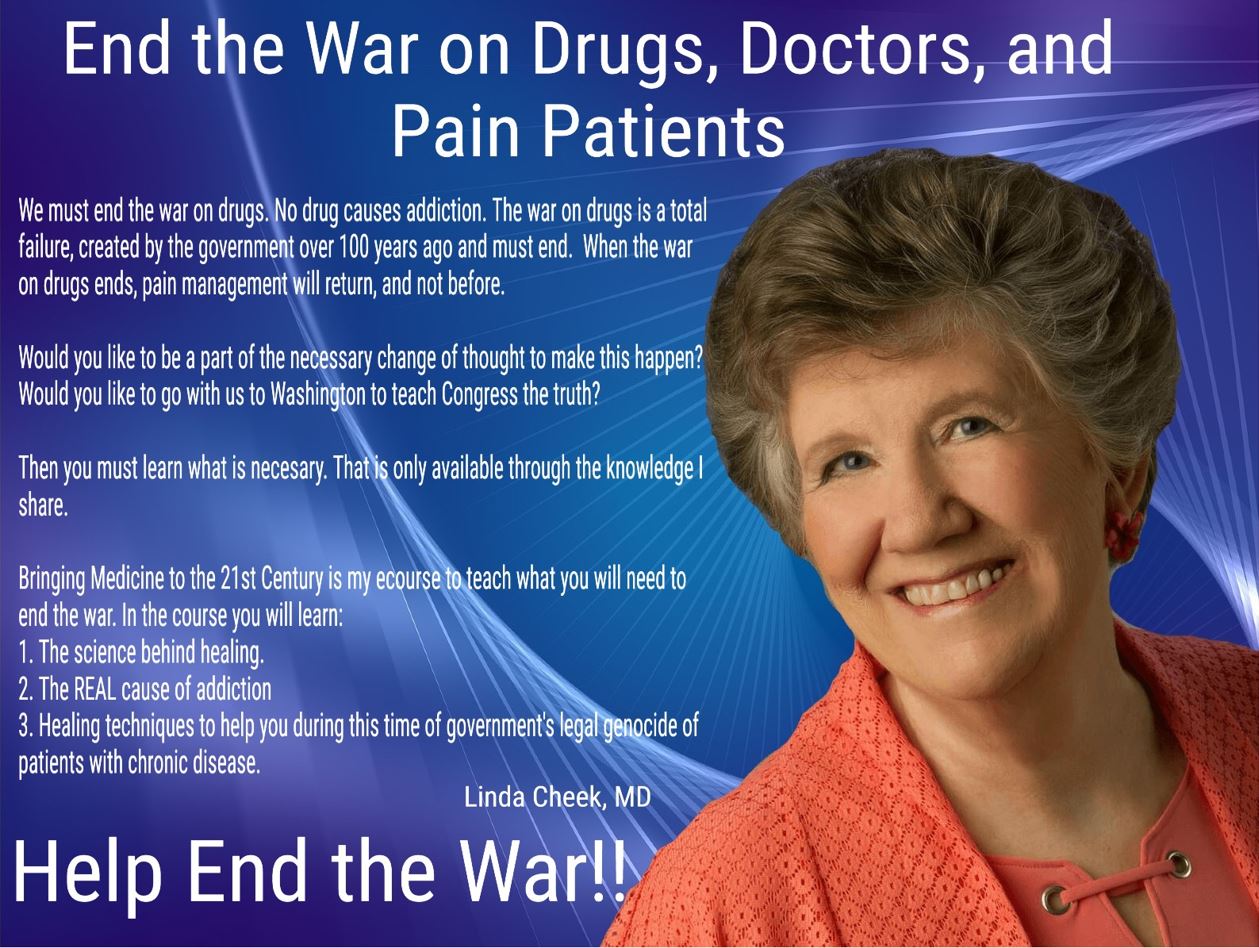
The answer to end the attacks on pain,
doctors, and patients
The information necessary to get people to understand that drugs, especially opioids that are necessary to treat pain, are not the cause of drug abuse or addiction. This ecourse is now self-paced. I will only hold review/Q&A sessions if a group of 10 or more sign up together. I will be available individually through email, but no personal medical suggestions will be made, only explanation of the points of the ecourse. If you want the attacks on pain to stop before 2050, you must learn this information well enough to teach it to others.
Access to the ecourse is for 6 months. Invitations to a zoom conference to review the information is at the discretion of Dr. Cheek, or if there are at least 10 individuals taking the ecourse at the same time.
For information on what is included in the ecourse, go to
Sevenpillarstotalhealth.com/course-introduction/
Dr. Joseph Parker interviews me here, to learn about my history of how I became an advocate, and my journey through healing medicine with the resulting attacks by the government. Thank you, Dr. Parker, for your help. We will get you released before your 7 year imprisonment is concluded.
The Debate of the Year: Which Will End the War on Opioids--CDC guideline revocation or repeal of the Controlled Substance Act?
Red Lawhern, PhD, joins Linda Cheek, MD in discussing this very important question. Red is the most prominent supporter of revoking the CDC guidelines. Linda is in favor of repealing the CSA.
Share this link with everyone you know so they can make an informed decision on what we need to do.
2025-26 Communication Campaign:
Imagine the future:
Doctor writing prescriptions
for opioids without fear
How will this get accomplished?
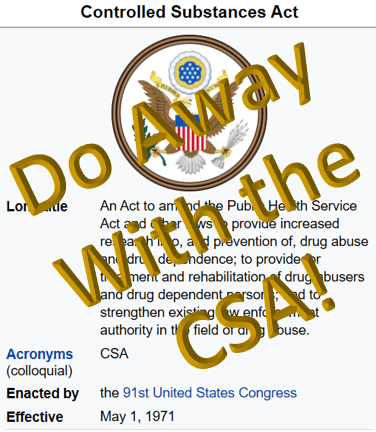
I don’t want to ever give up trying to get people to do what is needed to stop the government attacks on opioids, pain management, doctors, and chronic pain patients. But it seems people are just not interested in fixing the problem, just complaining about it.
Back in February, 2025, I spent a month of time putting together the Communication Campaign page, with all contact information for every legislator, including email, snail mail, facebook page, X page. But seldom is there a visitor. So, it would appear my time is a waste. Whether I do it again in 2027 will depend on the use of the communication campaign through 2026.
It takes thousands of communications to legislators to get their attention. All the people out there who say “I write to my legislator” are basically wasting their time. Their letter goes into the circular file and the staff person who read it simply spits out a form letter to send back. The legislator never hears what you said, and obviously from the continued anti-opioid policies being proposed by our legislators they will continue chasing the rabbit wasting tax dollars. So I hope people get on what is needed–what we have here on Doctors (and Patients) of Courage.
For 2026, I want to focus on getting the Controlled Substance Act repealed. But that requires people doing the necessary work–learning the information we offer here.
We have to get this information to the legislators. I amgoing to try to run the communication campaign one last time. In the past there have been few visits to the page, so it would appear my work has been a waste of my time. But with the knowledge you can learn here, every person can participate in sharing it with the legislators. So start with learning what is needed by watching the webinar recording on the top menu bar. If you don’t know who your health staffers are, fill out the pink form on the Contact Us page, and I’ll send you that information.
So please, share this website with all of your contacts. If I get enough interest out there, I might continue the Communication page in the future.
Doctors of Courage Pamphlets
Permission to Copy and Share
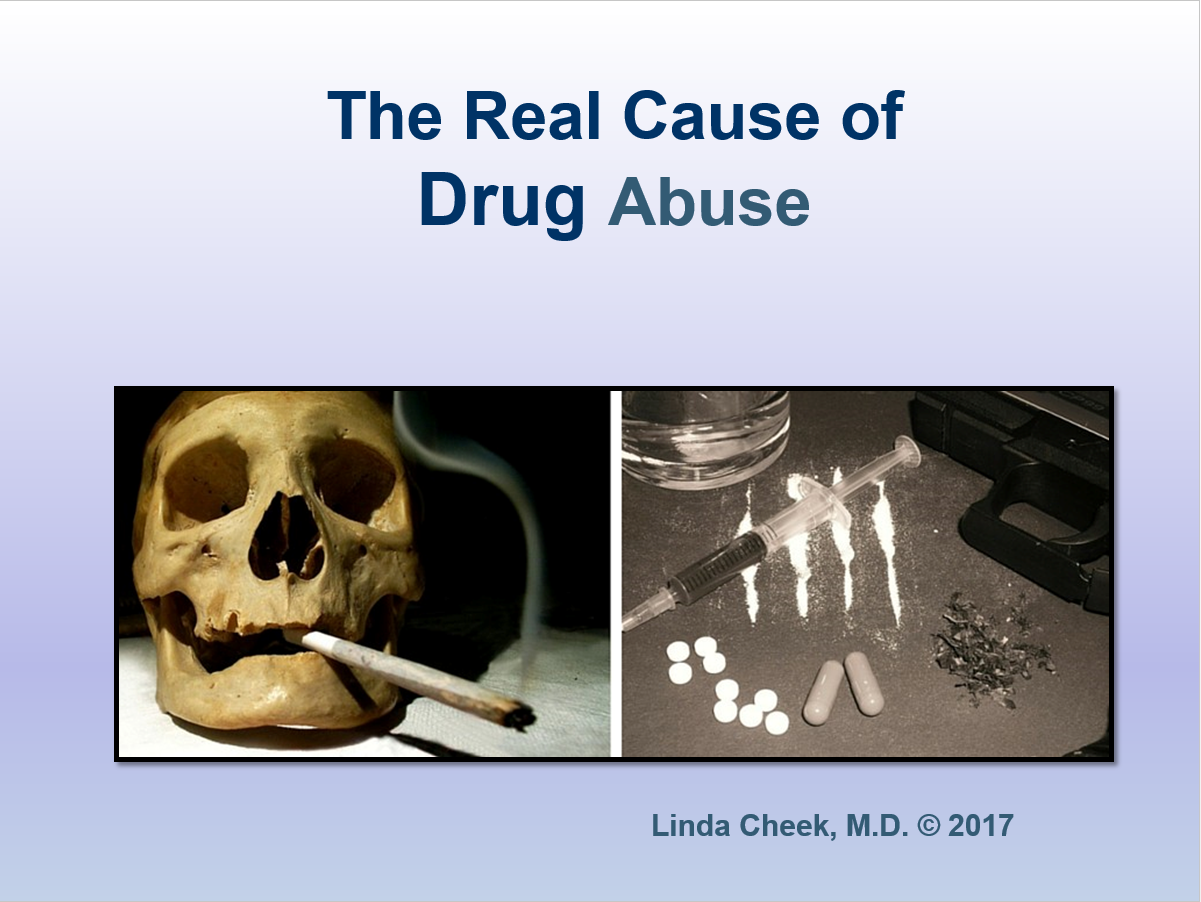
The Real Cause of Drug Abuse
This is the information that will change the opiaphobia in the nation because drugs are not the cause of drug abuse. Once this is understood, the suffering will stop.

Doctors (and Patients) of Courage
This pamphlet explains the purpose of DoC and why people should get on board with us. We Hold the Key!: What will unlock and expose the government agenda against opioids.

The Seven Steps to Healing
This teaches what people need to know to cure most chronic disease. This includes addiction.
Concerns & Demands for Congress. Get Your Copy to Use.
DOCTORS OF COURAGE (DoC)
www.doctorsofcourage.org
To the President of the United States, U.S. Senate, U.S. House of Representatives, Governors and State Legislatures:
Concerns
1. The “Opioid Epidemic” is an “Illegal and Illicit Drug Abuse Crisis” falsely blamed on legal prescriptions written by physicians
2. The disproportionate and discriminatory over-prosecution of black and other ethnic physicians of color by the DOJ, DEA, criminal justice system and state medical boards
3. The alarming increase in the death rate of chronic pain patients, who are opioid non-abusers, through DOJ persecution of treating physicians. This has created an epidemic of suicides, especially by veterans, through physician abandonment and limiting needed medications by pharmacies
4. The increase in the horrendous death rate of sickle cell anemia chronic pain patients, who are mostly African American. The denial of National Institute of Health (NIH) standard of care treatment guidelines by emergency room and hospital providers, using CDC guidelines to excuse “medical manslaughter” and “black genocide”
5. The cost of human suffering and loss of quality of life of chronic pain patients, who are opioid non-abusers
6. Government overreach leading to non-medical government agencies practicing medicine without a license
7. Violation of Doctors’ Constitutional Rights
a 4th amendment through illegal search and seizure, use of warrants without just cause.
b 5th amendment through lack of due process.
c 6th amendment rights of a speedy and public trial, an impartial jury, the right to be informed of the charges, the right to confront and call witnesses, and the right to an attorney.
d 14th amendment through loss of property. A doctor’s profession is his property.
8. Misuse of the forfeiture statute of the CSA
Demands
1. The investigation of the DOJ by the U.S. Congress for the prosecution of physicians through the illegal application of the Controlled Substance Act.
2. Doctors that have been charged or convicted based on Title 21, The Controlled Substance Act, be immediately released from prison and exonerated from any federal charges, including Medicare/Medicaid fraud charges, as that is simply a door-opener.
3. Doctors have their licenses and DEA certificates restored
4. The CSA be amended or new law written to permanently exempt doctors from charges related to controlled substance prescriptions in words that even US Attorneys can understand.
5. Remove the actual immunity from prosecutors. If they break the law to convict an innocent person, they should be prosecuted, not protected.
6. Defendants should have first option of witnesses. The government should not be allowed to declare everyone a government witness and leave the defendant with no one.
7. Allow doctors who have been denied DEA certification without cause a means of civil action to be remunerated for their loss of their 14th amendment rights.
8. A search warrant into a doctor’s office must be served with actual charges in mind, based on the criminal standard of actual sale of prescriptions for resale or abuse, not for patient treatment.
9. Stop asset forfeiture prior to conviction.
10. Investigate National Data Banks for publishing false allegations against medical professionals. Information should not be public until proven.
To send this to your legislators, here is the pdf version which you have permission to download and send as is: DoC’s Concerns and Demands
DoC Newsletter
Stay informed on what is happening in the War Against Doctors and Patients! Be a part of the change you want to see in the world. Sign up here for the news.
Stay Up to Date With The Latest News & Updates
Access Premium Content
Have all of the legislators available by point and click when you join the membership site.
Join Our Newsletter
Get up-to-date monthly on the latest news.
Follow Us
Connect to stay up with news and announcements.
Doctors of Courage
lindacheekmd@gmail.com
Help stop government overreach into medicine. Be a part of the change you want to see in the world.
© 2016 Linda Cheek, MD.
QUICK LINKS
DVD's