
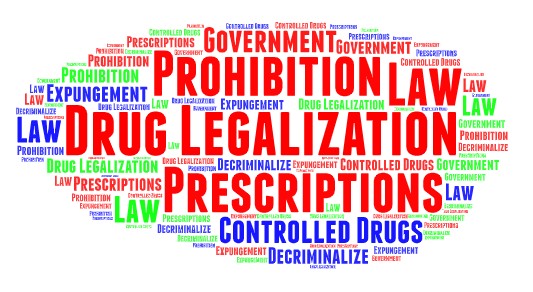
The world is ready to legalize all drugs, so what is stopping us?
Legalizing drugs in the United States and around the world is not just a matter of policy—it is a profound shift toward justice, public health, and rational governance. The prohibitive approach, often called the “war on drugs,” has left a legacy of mass incarceration, social injustice, and global instability, while failing to achieve its goals of safety or public health.
Steps Toward Legalization
Recent years have seen notable movement in U.S. drug policy. Bipartisan agreement has emerged around ending the war on drugs, marked by retrenchment from harsh enforcement and increased support for public health approaches. Recent initiatives include:
The 2020 House passage of the MORE Act, aiming to federally decriminalize cannabis, expunge convictions, and reinvest in affected communities. However, the Act did not make it through the Senate.
- State-led legalization of medical and non-medical cannabis, now spanning the majority of U.S. states and territories.
- Oregon’s pioneering 2020 policy to decriminalize possession of numerous drugs, shifting from criminal enforcement to public health responses.
- Passage of the Medical Marijuana and Cannabidiol Research Expansion Act in 2022, advancing medical research, and President Biden’s blanket pardon for those with federal simple cannabis possession convictions.
Notably, the U.S. is moving toward reclassifying cannabis as a Schedule III drug—officially acknowledging its medical value and lower risk than previously recognized.
Global and Domestic Alternatives
International perspectives echo these reforms. The United Nations High Commissioner for Human Rights and numerous global organizations now recognize drug prohibition as a failed, punitive strategy that has exacerbated violence, empowered cartels, and undermined human rights. They advocate for decriminalization, regulation, and approaches rooted in health and human rights.
States like Portugal, which decriminalized all drugs in 2001, have shown these strategies do not increase drug use but instead foster successful public health outcomes.
The Case for Legalization
Drug legalization provides a host of benefits:
- Public Health and Harm Reduction: Criminalization has failed to deter use, but has driven people away from treatment, exposed vulnerable populations to abusive enforcement, and burdened communities of color. Legal, regulated markets—backed by investment in treatment and harm reduction—limit deaths from tainted supply and encourage access to healthcare.
- Crime and Corruption Reduction: Prohibition fuels illegal trade, organized crime, corruption, environmental destruction, and instability, especially in producer regions. Legalization undermines these illicit markets and reduces violence.
- Financial Savings and Revenue: Legalization could save the U.S. government over $41 billion annually in enforcement and incarceration costs, while generating an estimated $46 billion in new tax revenues.
- Social Justice: Harsh penalties have disproportionately harmed Black and Latino communities, saddling millions with criminal records and life-long barriers. Legalization and expungement can help repair this damage and restore opportunities.
Global Change and Political Will
The principal obstacle to reform remains political, not technical. As seen with the end of alcohol prohibition, sweeping policy change may seem impossible—until it happens due to overwhelming evidence and public demand.
Across Europe, Australia, and Latin America, countries have moved to decriminalize or legalize various substances, often with positive results. The U.S. now stands at a crossroads, with public opinion—over 65% of voters—in favor of ending the war on drugs and investing in treatment and recovery.
Conclusion
Legalization is not just a policy reform, but a necessary step toward healing the deep wounds inflicted by punitive prohibition. With political will, evidence-based approaches, and global cooperation, society can finally move away from a failed model and achieve lasting benefits in health, justice, and security.
All that is missing for people to get on board the need for legalization of all drugs is the knowledge that I’ve been sharing for the last 9 years on this website—that drugs are not the cause of addiction. If people would just learn this and stop chasing the rabbits out there, we would have pain management back. If not, well, I think you know the future.
Linda Cheek is a teacher and disenfranchised medical doctor, turned activist, author, and speaker. A victim of prosecutorial misconduct and outright law-breaking of the government agencies DEA, DHHS, and DOJ, she hopes to be a part of exonerating all doctors illegally attacked through the Controlled Substance Act. She holds the key to success, as she can offset the government propaganda that drugs cause addiction with the truth: The REAL Cause of Drug Abuse.
Get a free gift to learn how the government is breaking the law to attack your doctor: Click here to get my free gift
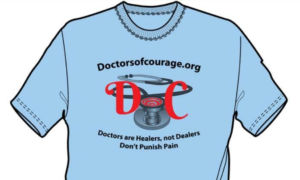
Would like to purchase the t-shirt and of course will share this post.
That would be great! We need the advertisement to get the word to everyone. Just go to https://doctorsofcourage.org/store/T-shirts-c28690135 and order your size. Thanks.