
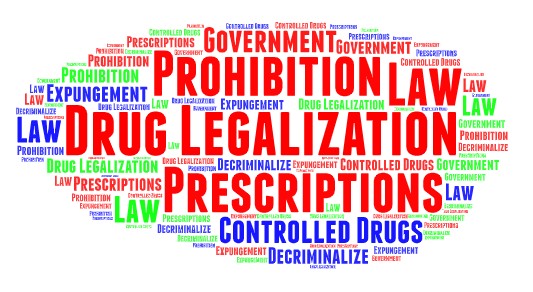
Global Legalization of All Drugs: A Human Rights Imperative
The global “war on drugs” has not just failed—it has inflicted deep and lasting harm on millions of people worldwide. Amnesty International’s 2024 report Advancing New Drug Policies That Uphold Human Rights makes this clear: prohibition has not eradicated drug use or trafficking. Instead, it has fostered violence, mass incarceration, health crises, and severe human rights abuses—from extrajudicial killings and torture to discrimination and denial of healthcare.
The Failure of Prohibition
Over sixty years of punitive drug control—anchored in the UN’s 1961, 1971, and 1988 drug conventions—have produced little more than criminalized poverty and expanded illicit markets. The assumption that drugs are an “evil” to be eradicated has justified excessive policing and militarized enforcement. Yet global drug use has climbed steadily, up 23% between 2011 and 2021. The outcome is not a safer world, but one more violent, divided, and diseased.
Punitive drug policies have devastated marginalized populations: poor communities, racial and ethnic minorities, Indigenous Peoples, women, and youth. The so-called “war on drugs” is, in fact, a war on people—especially on those lacking political power, economic security, or social standing.
A New Paradigm: Health and Human Rights Over Punishment
Amnesty International and multiple UN bodies—from the Office of the High Commissioner for Human Rights to the Special Rapporteur on the Right to Health—now call for a decisive break from criminalization. Governments must recognize that people who use drugs do not forfeit their human rights. The state should assume regulatory control over drugs, ensuring their production, distribution, and sale occur safely and ethically while providing access to prevention, harm reduction, and treatment services.
This shift means:
- Decriminalizing the use, possession, cultivation, and acquisition of drugs for personal use.
- Expanding health and social services, including voluntary treatment, clean needle distribution, naloxone access, and non-coercive rehabilitation.
- Ending discrimination and arbitrary detention, especially against marginalized communities.
- Guaranteeing privacy, ending forced drug testing, and protecting medical confidentiality.
- Respecting Indigenous traditions involving plant-based substances used for cultural or spiritual practices.
Addressing Root Causes and Inequities
An effective drug policy recognizes the socio-economic roots of the illicit trade—poverty, unemployment, housing insecurity, and systemic discrimination. Reform must therefore include investments in education, housing, employment, and health systems. States must also guarantee that drug dependence or use can never justify child separation, imprisonment, or denial of parental rights.
Moreover, governments need to abandon the use of forced or “compulsory” drug treatment programs, which often amount to arbitrary detention and medical coercion. Healthcare, not punishment, should be the primary response.
Regulating to Reduce Violence
Legal regulation is not about promoting drug use—it is about taking control away from criminal cartels and putting it into the hands of accountable institutions. Proper regulation involves:
- Setting quality, potency, and labeling standards.
- Imposing age restrictions, licensing producers and vendors, and preventing predatory advertising.
- Designing markets that prioritize equity and community participation, especially for those historically harmed by prohibition.
- Funding anti-corruption and justice-strengthening measures to prevent corporate dominance and organized crime infiltration.
With regulation, drug proceeds can shift from fueling criminal economies to supporting healthcare and harm reduction—creating social benefit rather than social destruction.
Reforming International Law
The existing UN drug conventions are outdated and incompatible with modern human rights norms. Countries should reinterpret, amend, or, if necessary, withdraw from these treaties to implement evidence-based regulation. Drug policy successes should be measured not by arrests or seizures, but by fewer overdose deaths, lower incarceration rates, decreased HIV transmission, and improved quality of life.
Toward a World That Supports, Not Punishes
The global legalization and regulation of all drugs is not radical—it is rational. It restores dignity to those criminalized by unjust laws and redirects state resources toward health, equity, and justice. States have a duty to ensure that drug control serves people, not ideology, and that every human being—regardless of their relationship to drugs—is protected in their rights and humanity.
Linda Cheek is a teacher and disenfranchised medical doctor, turned activist, author, and speaker. A victim of prosecutorial misconduct and outright law-breaking of the government agencies DEA, DHHS, and DOJ, she hopes to be a part of exonerating all doctors illegally attacked through the Controlled Substance Act. She holds the key to success, as she can offset the government propaganda that drugs cause addiction with the truth: The REAL Cause of Drug Abuse.
Get a free gift to learn how the government is breaking the law to attack your doctor: Click here to get my free gift
I write this little (AI assisted) blurb being generally conservative (but really libertarian) leaning. Now we are blowing up people on the high seas. No due process. Just call them enemy combatants or “narco-terrorists, or some such thing. What could go wrong with that? Lets look back at the Ahuas massacre, a 2012 incident in which U.S. DEA agents assisting Honduran forces killed four innocent civilians during a botched anti-drug operation on the Patuca River in the remote Moskitia jungle region of northeastern Honduras.
What Happened
On May 11, 2012, a nighttime DEA mission under Operation Anvil sought to intercept a boat carrying cocaine traffickers. DEA and Honduran agents were in helicopters operated by U.S. contractors. During confusion on the river, they opened fire on what turned out to be a civilian river taxi carrying 16 villagers—killing four people, including two women, a young man, and a 14‑year‑old boy, and injuring several others. It took years for the FEDs to admit any of this and the victims families have never been compensated nor have t he people involved gotten in any kind of trouble.
What an incisive and courageous essay, Dr. Cheek. You have articulated with both moral clarity and clinical wisdom what many in public health have long recognized but too few dare to say aloud — that the so-called “war on drugs” is, in truth, a war on people. Your call to replace punishment with compassion and control with care resonates deeply with anyone who has witnessed the human cost of misguided policy. The framing of drug legalization as a human rights imperative transforms the debate from one of politics to one of conscience. This is more than an argument — it is a prescription for healing a global wound, one rooted in stigma, inequity, and fear.
Thank you, Dr Arshad for your response and positivity.