
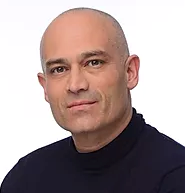
Richard Arjun Kaul, MD passed away on December 19, 2025, at the young age of 61, supposedly because of a heart attack. This post is to commemorate his life and legacy.
Dr. Kaul was a brilliant, compassionate spine surgeon and a fearless legal warrior whose life embodied the mission of Doctorsofcourage.org: to defend ethical physicians, expose systemic corruption, and protect patients’ access to compassionate pain care. His story is not only one of medical innovation and philanthropy, but also of extraordinary courage in confronting the weaponization of law and regulation against doctors who dare to treat pain effectively.
Early life and calling to heal
Richard was born on November 5, 1964, in Hyderabad, India, the third child of airline pilot Ravi Kaul, a Kashmiri Brahmin, and Marie Kaul from Agra. As a child he was lively, inquisitive, mischievous, intelligent, and charming, qualities that later defined both his bedside manner and his courtroom tenacity.
In 1971, his family moved to England and settled in Dartford with his grandparents, where Richard continued to excel both academically and on the sports field. That drive carried him into the Royal Free Hospital School of Medicine at University College London (1983–1988), where he earned his Bachelor of Medicine and Bachelor of Surgery degrees and laid the foundation for a career at the cutting edge of pain medicine.
Innovator in minimally invasive spine care
After graduation, Dr. Kaul completed pivotal posts as a surgical house officer at The Lister Hospital and a medical house officer in the Academic Department of Medicine at the Royal Free, before crossing the Atlantic to complete residency in surgery and anesthesiology at Montefiore Medical Center in New York in 1995. He then returned to the UK for a fellowship in interventional pain management at the Bristol Royal Infirmary, later practicing as a general physician for six years before moving fully into private practice focused on minimally invasive spine surgery.
Settling in the United States in 2001, he opened New Jersey Spine and Rehabilitation in 2005, serving as owner, president, and lead physician and surgeon. There he applied his background in anesthesiology, surgery, and interventional pain management to develop outpatient spine procedures that offered patients faster recovery, less blood loss, and lower infection risk than traditional open operations.
Among his most important contributions was the invention and early adoption of a percutaneous lumbar fusion procedure in 2005, a technique that eliminated many of the aggressive surgical maneuvers responsible for high rates of infection, nerve damage, and poor outcomes in conventional spine surgery. Patients frequently went home the same day, with minimal blood loss and low infection rates, and Dr. Kaul went on to teach his methods to other surgeons, helping to shape a new generation of minimally invasive spine specialists.
Empathy, faith, and global service
Behind the technical achievements stood a deeply empathic physician who related to his patients with humanity and respect. Many stayed in touch with him long after their successful treatments, a testament to his willingness to listen, explain, and treat people rather than simply diagnose them. He made friends wherever he went because of his genuine interest in others, his loyalty to family, and his determination to build structured support for those in need.
In 2008, he founded The Spine Africa Project, a 501(c)(3) initiative designed to bring minimally invasive spine surgery and related education to some of the world’s most underserved communities across the African continent. In conjunction with that effort, he launched “The Invictus Initiative,” a program aimed at helping incarcerated men in the United States reframe their life challenges and discover new paths forward. These projects reflected not only his scientific mind but also his strong spirituality and faith, which guided his choices and sustained him through profound adversity.
Targeted for his work and forced into law
As his minimally invasive practice flourished, Dr. Kaul’s work drew not only grateful patients but also powerful adversaries. In 2012, actions by the New Jersey State Board of Medical Examiners culminated in the revocation of his medical license in 2014, after an administrative law judge concluded that his performance of spine surgeries on 11 patients without what the Board deemed proper training and experience constituted gross and repeated malpractice, negligence, and incompetence. The Board imposed the statutory maximum fine of $20,000 for each of 15 counts, plus attorneys’ fees and costs, for a total assessed liability reportedly running into billions of dollars.
From Dr. Kaul’s perspective, these proceedings were not about patient safety but about “medical turf wars and political corruption in New Jersey,” driven by a network of politically connected neurosurgeons, hospitals, insurers, and lawyers whose financial interests were threatened by his innovative outpatient model. He argued that influential neurosurgeons and corporate players engaged in racketeering, evidence tampering, mail and wire fraud, perjury, and obstruction of justice in order to destroy his practice and make an example of him.
Since 2012, he responded by immersing himself in American law, becoming highly knowledgeable and fiercely competent in order to fight the injustices he believed he had suffered. This self-taught legal journey came at immense financial and physical cost, but his determination and belief in his cause sustained him through years of litigation, appeals, and public advocacy.
From Kaul v. Christie to the United Nations
Dr. Kaul’s central legal narrative is captured in his memoir, An Impossible Victory: Kaul v. Christie, which describes his effort to expose corruption within state medical boards, New Jersey courts, and political circles. In federal court he brought a sweeping civil action, Kaul v. Christie (16‑CV‑02364), seeking extraordinary monetary damages for what he described as the illegal revocation of his medical license and the resulting devastation to his patients and professional reputation. Although U.S. District Judge Kevin McNulty dismissed the suit, accepting the Board’s findings that he lacked the accepted standard of training for spine surgeries, Dr. Kaul continued to insist that his evidence showed a coordinated campaign of misconduct by neurosurgeons, insurers, hospitals, and judicial actors.
Unwilling to accept what he saw as a closed and corrupt system, Dr. Kaul took unprecedented steps by pursuing legal action against the State of New Jersey in India, arguing that the persecution of black and brown doctors—particularly immigrants—had risen to a level requiring international intervention. He also sought relief through a complaint to the U.N. Human Rights Committee, filed via judicial-reform advocate Zena Crenshaw-Logal, Esq., asking for international scrutiny of U.S. medical board practices and the treatment of minority physicians.
A lion of medicine and justice
In 2023, Dr. Kaul was honored with inclusion in Marquis Who’s Who, recognized for his “remarkable contribution” to spine surgery and his prominence as a pioneer of minimally invasive techniques. This recognition came even as he remained embroiled in legal and regulatory battles, underscoring the distance between how his peers and publishers viewed his contributions and how state agencies had treated him.
Throughout these years, Dr. Kaul lived by the motto “Never give up and never lose hope,” a philosophy reflected in his public talk “Adversity into Advantage.” He often cited Nelson Mandela as an inspiration and credited his parents for instilling in him the value of education and unwavering self-belief, even after being orphaned at sixteen. This combination of faith, resilience, and moral conviction made him a powerful ally to other persecuted physicians, whom he supported with information, strategy, and emotional encouragement as they faced raids, prosecutions, and board actions of their own.
Today, as Doctorsofcourage.org works to expose how the War on Drugs and the Controlled Substances Act have been used to criminalize pain management and destroy medical careers, Dr. Richard Arjun Kaul stands out as both a warning and a beacon. He shows how a gifted, empathic physician can be targeted and ruined for challenging entrenched financial interests—and how, even then, one person can push back, carrying the fight all the way from state hearing rooms to international human-rights bodies.
In life and in law, Dr. Kaul was a lion of medicine: a scientist, surgeon, and spiritual man who transformed spine surgery, cared for patients others had abandoned, and refused to surrender to a corrupt system that punished him for healing pain. His legacy now challenges the medical and legal communities to confront that corruption, protect compassionate physicians, and ensure that no other doctor must choose between treating pain and preserving a career.
Linda Cheek is a teacher and disenfranchised medical doctor, turned activist, author, and speaker. A victim of prosecutorial misconduct and outright law-breaking of the government agencies DEA, DHHS, and DOJ, she hopes to be a part of exonerating all doctors illegally attacked through the Controlled Substance Act. She holds the key to success, as she can offset the government propaganda that drugs cause addiction with the truth: The REAL Cause of Drug Abuse.
Get a free gift to learn how the government is breaking the law to attack your doctor: Click here to get my free gift
Thank you, Dr. Cheek, for this powerful and courageous tribute. You have written far more than an obituary—you have restored depth, dignity, and moral clarity to a physician too easily flattened by institutions and legal shorthand. Through your words, Dr. Richard Arjun Kaul emerges as a healer of rare brilliance, courage, and spiritual resolve.
I had the opportunity to speak with Dr. Kaul, and his wisdom and clarity left a lasting impression. It is impossible not to wonder how years of relentless stress, professional exile, and injustice may have contributed to his premature passing. Medicine itself teaches us that chronic stress exacts a real biological toll—on the heart, the immune system, and the will to endure. When a physician is stripped of purpose and the ability to heal, the harm is not merely legal; it is human.
You trace with compassion the tragic arc from innovation to persecution, from surgeon to forced legal warrior. Dr. Kaul’s persistence was not obstinacy—it was survival. If his life was shortened, it was not by weakness, but by the weight of fighting a system that too often confuses power with righteousness.
Your essay honors him with dignity and fire, and it asks the questions medicine must not avoid. Some deaths are natural; others are shaped by systems. This one feels uncomfortably close to the latter.
M. Kaleem Arshad, MD, DLFAPA
Thank you.
We must eliminate the current process for creating Boards of Medicine. It is totally political, and not in the best interest of medicine. Changes in medicine is historically because someone did something different, but better. Now, to establish standard medicine for the benefit of conventional doctors, anything different is punished, not applauded. This prevents good change in medicine. Boards of medicine should be determined by physicians, not politicians.
It’s my hope that my mission to end the CSA happens before I die. Sorry Dr. Kaul was not able to see the fruition of his work.