
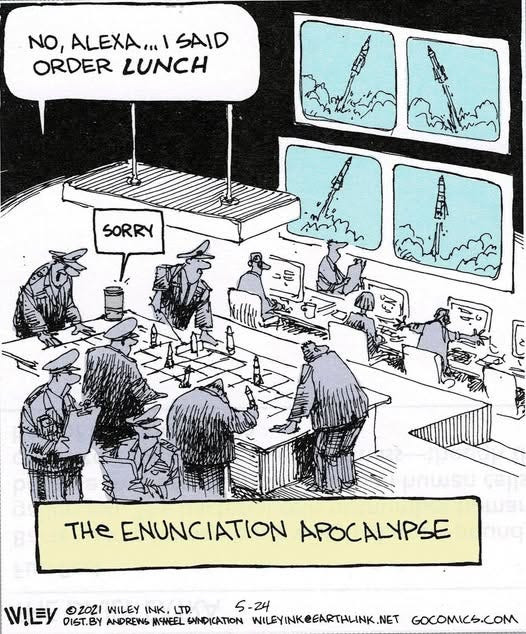
How the DEA’s Algorithmic Prosecution Machine Is Criminalizing Medicine
In a breathtaking fusion of Wall Street risk modeling, cyber-surveillance, and prosecutorial overreach, the U.S. Department of Justice has weaponized artificial intelligence to transform physicians into pre-crime suspects. No longer must the government prove criminal intent or patient harm. Instead, it deploys a sprawling, interlocking architecture of predictive analytics, de-confliction databases, and anomaly-detection algorithms to identify, isolate, and prosecute doctors based on statistical deviation alone. This is not justice—it is algorithmic vigilantism dressed in federal robes.
At the heart of this machinery lies the Drug Enforcement Administration’s (DEA) Special Operations Division, working in concert with the Organized Crime Drug Enforcement Task Force (OCDETF) Fusion Center and the El Paso Intelligence Center (EPIC). Together, they coordinate a national surveillance apparatus under the banner of “maximum harm reduction”—a euphemism for real-time data sharing between “public health and public safety.” Translation: law enforcement now plays doctor, armed with digital crystal balls and zero medical training.
The Surveillance Stack: From DARTS to SIRIS
The operational backbone includes:
- DARTS (DEA Analysis and Response Tracking System) and DICE (De-confliction and Information Coordination Effort): tools designed to “de-conflict” investigations by flagging overlapping law enforcement activities—but increasingly used to auto-generate suspicion around prescribers.
- NBI MEDIC (National Benefit Integrity Medicare Drug Integrity Contractor): a Medicare fraud detection engine that now monitors every opioid prescription as if it were a stock trade.
- Qlarant Artificial Intelligence System and CMS’s PLATO (Predictive Learning Analytics Tracking Outcomes): federal health analytics platforms repurposed for criminal targeting.
- NHCAA’s SIRIS (Online Special Investigation Resource and Intelligence System): a private-sector fraud tool now embedded in federal prosecutions.
These systems feed into Deloitte’s “Nemesis” platform, the DEA’s flagship AI engine, powered by the Isolation Forest (iForest) algorithm, a machine learning model originally designed for credit card fraud detection, not medical judgment.
The Isolation Forest: A Tool of Misplaced Certainty
Developed by Fei Tony Liu in 2008, Isolation Forest identifies “anomalies” by assuming that rare data points are inherently suspicious. But in medicine, rarity is often necessity. Chronic pain patients may require high-dose opioids, complex drug combinations (like the so-called “Trinity” of opioids, benzodiazepines, and muscle relaxants), or treatment from out-of-state specialists. These are not red flags, they are signs of individualized care.
Yet the DEA’s implementation treats them as criminal indicators. The algorithm flags prescribers based on:
- Patient travel distance to pharmacy or clinic
- Payment method (e.g., “private pay” = suspicious)
- Morphine Milligram Equivalent (MME) thresholds—penalizing doses ≥100 MME/day despite clinical guidelines acknowledging their legitimacy in select cases
- Patient criminal history, including prior drug charges
Worse, the system suffers from swamping and masking effects: in high-dimensional data (50+ risk factors), normal and anomalous cases become indistinguishable. Studies show Isolation Forest yields 94% false positives in fraud contexts—unacceptable in criminal law, where liberty is at stake. Critically, Isolation Forest is unsupervised: it has never been trained to distinguish medically appropriate outliers from criminal conduct. As Dr. S. Craig Watkins of UT Austin warns, these models amplify systemic bias because they are trained on decades of racially skewed policing data. The result? U.S. Physicians serving Black and low-income communities are algorithmically marked for prosecution.
The Prosecutorial Feedback Loop
This is not accidental. Dr. Timothy King, a key architect of the DEA’s analytics, holds U.S. Patent Application 20200143925A1, which explicitly states his methodology “aids in the criminal prosecution of pill mills.” He has earned $6,000 per day over 15 years advising the DOJ, creating a financial incentive to find guilt, not truth.
In United States v. Anand, the government cherry-picked 14 patients (2% of his practice) flagged by Nemesis as “outliers.” Defense analysis proved the odds of this sample occurring randomly were less than 1 in 2 million, proof of deliberate bias. Meanwhile, Dr. Anand’s full prescribing record placed him in the 77th percentile nationally for opioid prescribing among pain specialists, meaning 77% of his peers prescribed more aggressively. Yet the algorithm ignored this context.
This mirrors the Third Circuit’s recent ruling in United States v. Titus (2023), which vacated a conviction based on extrapolation from a non-representative sample. The court held: “The government must show an adequate basis in fact for extrapolation and use methods consistent with accepted standards of reliability.” The DEA’s Isolation Forest fails this test on every count.
Racial Disparities: Algorithmic Apartheid in Healthcare
The human cost is staggering. Healthcare advocacy group’s data reveals that 33% of all physician prosecutions occur in jurisdictions where 90% of the population is minority—compared to just 1.5% in areas with 25% minority populations. That’s a 22-fold disparity. In poor urban communities, clinic closures following DEA raids have coincided with rising suicide rates, as patients with chronic pain or addiction lose access to care.
At trial, prosecutors weaponize patient backgrounds: in one case, a juror was reminded that a young Black patient “had a prior criminal history… had been in prison.” The defense retorted: “I’ve never heard the Government argue that having a criminal record would disqualify someone from receiving medical care. But I guess that’s where we are now.”
This is not harm reduction. It is digital redlining—using de-identified data to erase the humanity of vulnerable patients while preserving the illusion of objectivity.
Constitutional and Evidentiary Collapse
This entire framework violates foundational legal principles:
- United States v. Moore (1975) requires proof that prescriptions lacked a “legitimate medical purpose” and fell “outside the usual course of professional practice.” The algorithmic approach bypasses patient-specific analysis entirely.
- United States v. Lopez (1995) and Morrison (2000) prohibit federal criminalization of non-economic, local activities like medical judgment. The government’s “attenuated chain of inference”—that prescribing might lead to diversion—was explicitly rejected by the Court.
- Daubert v. Merrell Dow (1993) demands scientific reliability. Isolation Forest has no validation in medical contexts, no known error rates for criminal use, and zero acceptance in the medical community.
- 42 U.S.C. § 1395 bars federal interference in the practice of medicine—a line the DOJ now treats as optional.
The LTCM Mirage: Wall Street Logic in Public Health
Most chillingly, the DOJ has imported Long-Term Capital Management (LTCM)-style risk models, the very tools that triggered the 2008 financial collapse, into opioid enforcement. As one critic put it: “It’s like applying high-frequency trading algorithms to the drug epidemic. A sell signal goes off, and the feds storm in like it’s Black Monday.”
But patients are not derivatives. Doctors are not traders. And pain is not a portfolio to be hedged.
Conclusion: A Stand for the Rule of Law
America’s empire of law falls not with a bang, but with a computer query. When a federal prosecutor can type a physician’s name into DARTS, watch Nemesis light up with Isolation Forest anomalies, and build a felony case on 14 cherry-picked files—while ignoring national prescribing norms, clinical context, and constitutional limits—we have surrendered justice to computer code. The exclusion of the government’s evidence in United States v. Anand is not merely a procedural remedy. It is a necessary defense of due process, medical autonomy, and equal protection. Courts must recognize that statistical outliers are not criminals. And algorithms trained on bias cannot deliver justice—they only automate oppression. The proper forum for evaluating medical practice remains the state medical board, not the OCDETF Fusion Center. Until then, America’s fall continues—and with it, the quiet abandonment of millions in pain.
Dr. Anand received an honorable discharge from the U.S. Navy where he utilized regional anesthesia and pain management to treat soldiers injured in combat at Walter Reed Hospital. The Author is passionate about medical research and biotechnological innovation in the fields of 3D printing, tissue engineering and regenerative medicine.
Dr. Anand was convicted through gross government misconduct and is now serving a 14 year sentence in prison. He will still be contributing articles to Doctorsofcourage to help with the mission to get the CSA repealed and all doctors expunged of their convictions, back in practice, and pain management restored.

Many prosecutors obviously proceed with little regard to the US Supreme Court Rulings as listed in US vs Moore (1975),US vs Lopez(1995)and Morrison (2000),Daubert vs Dow(1993)and US vs Ruan (2022). Are there no consequences for prosecutors, judges, as well as defense attorneys who blatantly ignore the rulings of SCOTUS. What is the purpose of the Supreme Court if its work is ignored?
The courts support the prosecutors because they all make money off of the convictions of doctors. This can all be compensated for when we get the CSA repealed. That is our mission. Get behind it and we can get the justice department uncorrupted or they pay the price.