
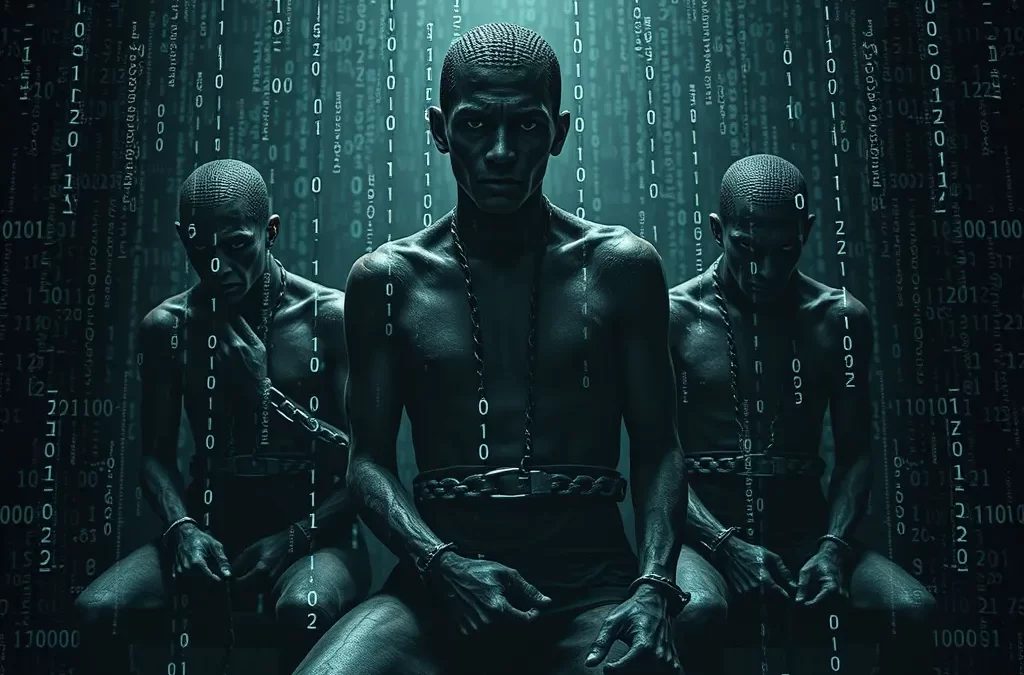
How Deloitte’s Espionage Empire Built the DEA’s 94% False Positive Prosecution Engine to Incarcerate Thousands of U.S. Physicians
In the quiet corridors of federal courtrooms, a statistical paradox masquerades as justice, a U.S. Government forensic tool with a documented 94% false positive rate is producing a 99% conviction rate. This is not an accident of data, it is the engineered outcome of a system built not on medical evidence but on corporate espionage repurposed as state power.
At the heart of this machinery stands Deloitte, the global consulting giant that, in 2007, deployed former CIA officers, including John Kiriakou, the operative who helped capture Abu Zubaydah, to eavesdrop in Orlando convention center bathrooms and steal “abandoned” financial documents from a rival firm, BearingPoint. That operation, though never deemed illegal, was a masterclass in human-led corporate espionage, yielding the “holy grail” of competitor intelligence: revenue projections, client lists, and strategic vulnerabilities.
By 2009, Deloitte used that intelligence to acquire BearingPoint’s North American public services unit for $350 million, instantly doubling its federal footprint. Today, Deloitte commands $3.7 billion in federal contracts and ranks #25 among all U.S. government contractors—a transformation fueled not by organic growth, but by strategic intelligence gathering bordering on the clandestine.
From Bathroom Eavesdropping to Black-Box Algorithms
But Deloitte did not stop at human spies. It digitized them. The same competitive intelligence unit that once hid in restrooms to overhear panicked consultants now builds AI-driven surveillance platforms for the U.S. government, including the DEA’s Nemesis system, powered by the Isolation Forest algorithm. This is not a metaphorical evolution; it is a direct lineage. Deloitte’s 2007 playbook collects non-public data, exploits asymmetry, manufactures advantage, and has been automated, scaled, and weaponized against physicians. Where Kiriakou once scribbled notes in a bathroom stall, Isolation Forest now auto-generates “Anomaly Risk Scores” based on 69+ non-clinical factors:
– “Private pay” prescriptions (a proxy for poverty)
– “Distance to pharmacy” (a proxy for rural Black communities)
– “Criminal record” and “drug charge” history (a proxy for race)
– “Trinity” drug combinations (a proxy for complex pain)
None of these factors assesses medical necessity. All of them encode socioeconomic and racial bias under the guise of actuarial neutrality. And just as Deloitte’s spies in Orlando cherry-picked BearingPoint’s most vulnerable moments, the Nemesis system cherry-picks the top 2% of statistical outliers from a physician’s practice—patients who, by definition, require atypical care.
In United States v. Anand, this yielded a sample so skewed that defense expert Ryan Vaughn calculated its random occurrence probability at less than 1 in 2 million. Five of the 14 government-selected patients were among Dr. Anand’s top 10 highest-dose cases—a selection so extreme it defies statistical legitimacy.
The 94% False Positive Engine Meets the 99% Conviction Machine
Isolation Forest was never designed for criminal justice. In credit card fraud detection—a domain with similar data imbalance—it achieves a precision of just 0.06, meaning 94 out of 100 flagged cases are false positives. In medicine, where outliers are often the sickest patients, this error rate is catastrophic. Yet the DOJ treats these false positives not as errors, but as investigative leads. Each flagged prescriber enters a pipeline where:
- Algorithmic suspicion replaces medical review
- Cherry-picked outliers replace representative sampling
- Plea coercion replaces trial
Over 97% of federal convictions result from guilty pleas, not jury verdicts. Faced with decades in prison under mandatory minimums, doctors—like countless before them—plead guilty to crimes they did not commit. The algorithm provides the pretext; the sentencing guidelines provide the pressure. Thus, the 94% false positive rate fuels the 99% conviction rate—not through truth, but through systemic coercion.
Deloitte’s Dual Legacy: Espionage and Incarceration
Deloitte’s role in this system is no coincidence. Its acquisition of BearingPoint didn’t just expand its federal business, it absorbed BearingPoint’s existing contracts with health and law enforcement agencies, including data analytics work for Medicare fraud detection. From that foundation, Deloitte built Nemesis: a fusion of Wall Street risk modeling, CIA-style intelligence tradecraft, and prosecutorial overreach.
The result is a self-destructive spiral feedback loop:
– Deloitte’s AI flags “anomalies” →
– DEA agents investigate outliers →
– Prosecutors cherry-pick extreme cases →
– Experts like Dr. Timothy King (paid $6,000/day, earned “millions”) rubber-stamp the constructed prosecution narrative →
– Juries convict based on distorted charts and decontextualized data →
– Physicians go to prison, clinics close, patients suffer
This is not healthcare oversight. It is algorithmic enclosure, the digital enclosure of medical judgment within a prosecutorial framework designed by former spies and optimized for volume, not truth.
Why the U.S. Leads the World in Incarceration
This system explains America’s carceral dominance. The U.S. imprisons 20% of the world’s prisoners despite having 4% of its population because its legal machinery is optimized for throughput over accuracy, coercion over justice, and metrics over medicine.
Deloitte’s Nemesis system enables high-volume targeting with minimal investigative effort, perfect for meeting DEA quotas. Federal prosecutors, incentivized by conviction stats and forfeiture revenues, escalate regulatory issues into felony prosecutions. And courts, deferring to the “objectivity” of algorithms, rarely question the underlying bias.
The victims are not just doctors, but the marginalized communities they serve. Physician advocacy groups have collected data which shows that 33% of physician prosecutions occur in jurisdictions where 90% of the population is minority, a 22-fold disparity compared to whiter areas. In Appalachia, Black patients are 78% more likely to be flagged as “high risk,” despite receiving 40% fewer opioids for the same pain. This is digital redlining, using de-identified data to erase the humanity of vulnerable patients while preserving the illusion of neutrality.
The Legal Reckoning
Courts are beginning to push back. In United States v. Titus (3d Cir. 2023), the Third Circuit vacated a sentence based on non-representative extrapolation, demanding “reliable and specific evidence.” In Latif v. Holder and Houston Federation of Teachers, federal judges struck down opaque algorithms that denied liberty or livelihood without due process.
Now, the future dominated by artificial intelligence presents a pivotal test: Will courts allow a 94% false positive tool, built by a firm with a documented history of corporate espionage, to stand as proof beyond a reasonable doubt? If they do, the rule of law surrenders to the algorithmic guillotine—swift, silent, and statistically indifferent to innocence.
Medicine Is Not a Crime—And Spies Should Not Build Prosecution Engines
The fall of America’s empire of law continues—not with jackboots, but with JSON payloads. Not with warrants, but with anomaly scores. Not with trials, but with plea forms signed in despair. But the remedy is clear, exclude the evidence. Exclude the Isolation Forest output. Exclude Dr. King’s testimony. Exclude the cherry-picked patient files. Without them, the government’s case collapses, because it was never about medicine. It was about metrics, acquisition, and empire.
Deloitte’s journey, from bathroom eavesdropping to black-box prosecution, reveals a disturbing truth: when intelligence gathering becomes indistinguishable from law enforcement, justice becomes collateral damage. The American empire may be falling. But it is not too late to rebuild it on something sturdier than code, and far more humane than espionage.
Dr. Anand received an honorable discharge from the U.S. Navy where he utilized regional anesthesia and pain management to treat soldiers injured in combat at Walter Reed Hospital. The Author is passionate about medical research and biotechnological innovation in the fields of 3D printing, tissue engineering and regenerative medicine.
Dr. Anand was convicted through gross government misconduct and is now serving a 14 year sentence in prison. He will still be contributing articles to Doctorsofcourage to help with the mission to get the CSA repealed and all doctors expunged of their convictions, back in practice, and pain management restored.

Very interesting Dr. Anand. You are really good at not only explaining what’s happening, but how it affects everyone. I always enjoy reading your articles. Thank you.