
Supreme Court Decision:
Ruan & Kahn v United States
What it means for doctors treating pain and pain patients
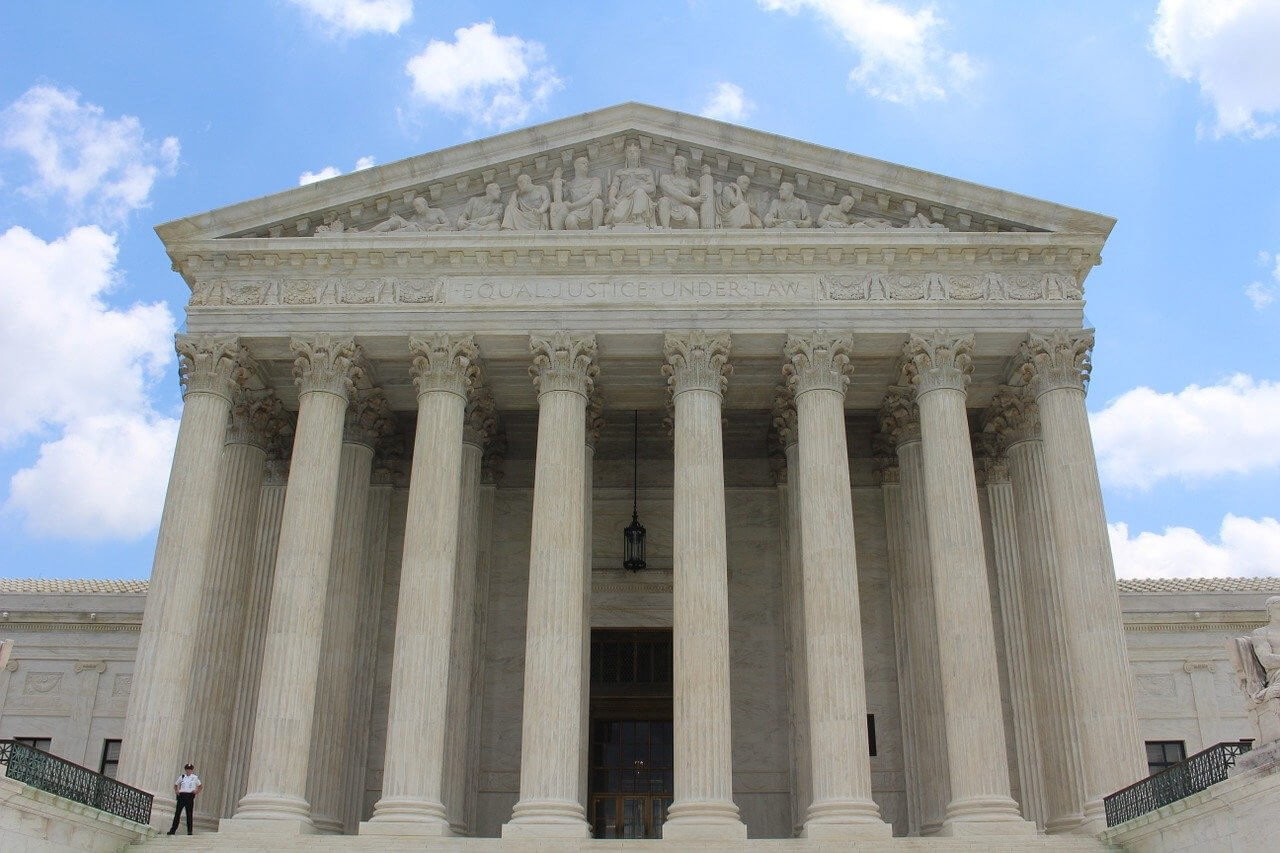
On June 27th, the Supreme Court of the United States issued a landmark decision on the attacks of doctors treating pain. This decision has been forthcoming for years, but they simply refused to hear a multitude of cases before it. But everything happens in God’s time not ours. So now we need to move forward in getting all of our criminalized physicians freed, exonerated, and back in practice.
Below you will find various approaches to do what needs to be done. This is not just an open-door policy for all those incarcerated. The wheels of justice turn slowly. But at least we have our foot in the door. And we all must work together to get this accomplished. So please, do what you can to get the word out. Few media stations are even reporting on this. They have been a big part of spreading the propaganda, so I’m sure they are regrouping to come out still in favor of blaming physicians for the government-created drug problem. So we need to get in their face with the truth, and that is what I teach. NO DRUG CAUSES ADDICTION!
The SCOTUS Decision
Ruan & Kahn v. United States Supreme Court Decision Syllabus
The publication of the decision can be found HERE.
SUPREME COURT OF THE UNITED STATES
Syllabus
XIULU RUAN v. UNITED STATES
CERTIORARI TO THE UNITED STATES COURT OF APPEALS FOR THE ELEVENTH CIRCUIT
No. 20–1410. Argued March 1, 2022—Decided June 27, 2022*
*Together with No. 21–5261, Kahn v. United States, on certiorari to the United States Court of Appeals for the Tenth Circuit.
Petitioners Xiulu Ruan and Shakeel Kahn are medical doctors licensed to prescribe controlled substances. Each was tried for violating 21 U. S. C. §841, which makes it a federal crime,
“[e]xcept as authorized[,]. . . for any person knowingly or intentionally . . . to manufacture, distribute, or dispense . . . a controlled substance.”
A federal regulation authorizes registered doctors to dispense controlled substances via prescription, but only if the prescription is “issued for a legitimate medical purpose by an individual practitioner acting in the usual course of his professional practice.” 21 CFR §1306.04(a).
At issue in Ruan’s and Kahn’s trials was the mens rea required to convict under §841 for distributing controlled substances not “as authorized.” Ruan and Kahn each contested the jury instructions pertaining to mens rea given at their trials, and each was ultimately convicted under §841 for prescribing in an unauthorized manner. Their convictions were separately affirmed by the Courts of Appeals.
Held: Section 841’s “knowingly or intentionally” mens rea applies to the statute’s “except as authorized” clause. Once a defendant meets the burden of producing evidence that his or her conduct was “authorized,” the Government must prove beyond a reasonable doubt that the defendant knowingly or intentionally acted in an unauthorized manner.
Pp. 4–16.
(a) Criminal law generally seeks to punish conscious wrongdoing. Thus, when interpreting criminal statutes, the Court
“start[s] from a longstanding presumption . . . that Congress intends to require a de-fendant to possess a culpable mental state.” Rehaif v. United States, 588 U. S. ___, ___. This culpable mental state, known as scienter, refers to the degree of knowledge necessary to make a person criminally responsible for his or her acts. The presumption of scienter applies even when a statute does not include a scienter provision, and
when a statute does “includ[e] a general scienter provision,” “the presumption applies with equal or greater force” to the scope of that provision. The Court has accordingly held that a word such as “knowingly” modifies not only the words directly following it, but also those other statutory terms that “separate wrongful from innocent acts.”
Here, §841 contains a general scienter provision—“knowingly or intentionally.” And in §841 prosecutions, authorization plays a “crucial” role in separating innocent conduct from wrongful conduct. United States v. X-Citement Video, Inc., 513 U. S. 64, 73. Moreover, the regulatory language defining an authorized prescription is “ambiguous” and “open to varying constructions,” Gonzales v. Oregon, 546 U. S. 243, 258, meaning that prohibited conduct (issuing invalid prescriptions) is “often difficult to distinguish” from acceptable conduct (issuing valid prescriptions). United States v. United States Gypsum Co., 438 U. S. 422, 441. A strong scienter requirement helps reduce the risk of “over-deterrence,” i.e., punishing conduct that lies close to, but on the permissible side of, the criminal line.
The statutory provisions at issue here are also not the kind to which the Court has held the presumption of scienter does not apply. Section 841 does not define a regulatory or public welfare offense that carries only minor penalties. Cf. Rehaif, 588 U. S., at ___; Staples v. United States, 511 U. S. 600, 618–619. Nor is the “except as authorized” clause a jurisdictional provision. Cf. Rehaif, 588 U. S., at ___. Pp. 5–8.
(b) Analogous precedent reinforces the Court’s conclusion here. In Liparota v. United States, 471 U. S. 419, United States v. X-Citement Video, 513 U. S. 64, and Rehaif v. United States, 588 U. S. ___, the Court interpreted statutes containing a general scienter provision (“knowingly”), and considered what mental state applied to a statutory clause that did not immediately follow the “knowingly” provision. In all three cases, the Court held that “knowingly” modified the statutory clause in question because that clause played a critical role in separating a defendant’s wrongful from innocent conduct. See Liparota, 471 U. S., at 426; X-Citement Video, 513 U. S., at 72–73; Rehaif, 588 U. S., at ___. As in those cases, the Court today concludes that §841’s mens rea applies to the “[e]xcept as authorized” clause, which serves to separate a defendant’s wrongful from proper conduct. Pp. 8–9.
(c) Neither the Government’s nor the concurrence’s contrary arguments are convincing. First, the Government and the concurrence correctly note that the statutory clauses in the cases just described set forth elements of an offense. Here, the Government and the concurrence say, §841’s “except as authorized” clause does not set forth an element of the offense. In support, they point to a separate statutory provision—§885. Section 885 says that the Government need not “negative any exemption or exception . . . in any complaint, information, indictment, or other pleading or in any trial,” and that “the burden of going forward with the evidence with respect to any such exemption or exception shall be upon the person claiming its benefit,” not upon the prosecution. But even assuming that lack of authorization is unlike an element in these two ways, §885 has little or nothing to do with scienter requirements. Section 885 simply absolves the Government of having to allege, in an indictment, the inapplicability of every statutory exception in each Controlled Substances Act prosecution. Section 885 also shifts the burden of production—but not the burden of persuasion—regarding statutory exceptions to the defendant, thereby relieving the Government of having to disprove, at the outset of every prosecution, the inapplicability of all exceptions.
Section 885 thus does not provide a basis for inferring that Congress intended to do away with, or weaken, ordinary and longstanding scienter requirements. At the same time, the factors discussed above—the language of §841; the crucial role authorization plays in distinguishing morally blameworthy conduct from socially necessary conduct; the serious nature of the crime and its penalties; and the vague, highly general regulatory language defining the scope of prescribing authority—all support applying normal scienter principles to the “except as authorized” clause. And the Government does not deny that, once a defendant satisfies his burden of production under §885 by invoking the authorization exception, the Government must then prove lack of authorization by satisfying the ordinary criminal law burden of proof—beyond a reasonable doubt.
The Government also offers a substitute mens rea standard. Instead of applying the statute’s “knowingly or intentionally” language to the authorization clause, the Government instead asserts that the statute implicitly contains an “objectively reasonable good-faith effort” or “objective honest-effort standard.” Brief for United States 16–17. But §841 uses the words “knowingly or intentionally,” not “good faith,” “objectively,” “reasonable,” or “honest effort.” And the Government’s standard would turn a defendant’s criminal liability on the mental state of a hypothetical “reasonable” doctor, rather than on the mental state of the defendant himself or herself. The Court has rejected analogous suggestions in other criminal contexts. See Elonis v. United States, 575 U. S. 723. And the Government is wrong to assert that the Court effectively endorsed its honest-effort standard in United States v. Moore, 423 U. S. 122, as that case did not address mens rea at all. Nor does United States v. Yermian, 468 U. S. 63, support the Government here, as that case dealt with a jurisdictional clause, to which the presumption of scienter does not apply.
Finally, the Government argues that requiring it to prove that a doctor knowingly or intentionally acted not “as authorized” will allow bad-apple doctors to escape liability by claiming idiosyncratic views about their prescribing authority. But the Court has often rejected this kind of argument, see, e.g., Rehaif, 588 U. S., at ___, and does so again here.
Pp. 9–15.
(d) The Court of Appeals in both cases evaluated the jury instructions relating to mens rea under an incorrect understanding of §841’s scienter requirements. On remand, those courts may address whether the instructions complied with the mens rea standard set forth here, as well as whether any instructional error was harmless. P. 15.
966 F. 3d 1101 and 989 F. 3d 806, vacated and remanded.
BREYER, J. delivered the opinion of the Court, in which ROBERTS, C. J.,
and SOTOMAYOR, KAGAN, GORSUCH, and KAVANAUGH, JJ., joined. ALITO,
J., filed an opinion concurring in the judgment, in which THOMAS, J.,
joined, and in which BARRETT, J., joined as to Parts I–A, I–B, and II.
Ruan & Kahn v. United States Supreme Court Decision Body
The publication of the decision can be found HERE.
SUPREME COURT OF THE UNITED STATES
Nos. 20–1410 and 21–5261
XIULU RUAN, PETITIONER
20–1410 v.
UNITED STATES
ON WRIT OF CERTIORARI TO THE UNITED STATES COURT OF APPEALS FOR THE ELEVENTH CIRCUIT
SHAKEEL KAHN, PETITIONER
21–5261 v.
UNITED STATES
ON WRIT OF CERTIORARI TO THE UNITED STATES COURT OF APPEALS FOR THE TENTH CIRCUIT
[June 27, 2022]
JUSTICE BREYER delivered the opinion of the Court.
A provision of the Controlled Substances Act, codified at 21 U. S. C. §841, makes it a federal crime, “[e]xcept as authorized[,] . . . for any person knowingly or intentionally . . . to manufacture, distribute, or dispense . . . a controlled substance,” such as opioids. 84 Stat. 1260, 21 U. S. C. §841(a) (emphasis added). Registered doctors may prescribe these substances to their patients. But, as provided by regulation, a prescription is only authorized when a doctor issues it “for a legitimate medical purpose . . . acting in the usual course of his professional practice.” 21 CFR §1306.04(a) (2021).
In each of these two consolidated cases, a doctor was convicted under §841 for dispensing controlled substances not “as authorized.” The question before us concerns the state of mind that the Government must prove to convict these doctors of violating the statute. We hold that the statute’s “knowingly or intentionally” mens rea applies to authorization. After a defendant produces evidence that he or she was authorized to dispense controlled substances, the Government must prove beyond a reasonable doubt that the defendant knew that he or she was acting in an unauthorized manner, or intended to do so.
I
The question we face concerns §841’s exception from the general prohibition on dispensing controlled substances contained in the phrase “[e]xcept as authorized.” In particular, the question concerns the defendant’s state of mind. To prove that a doctor’s dispensation of drugs via prescription falls within the statute’s prohibition and outside the authorization exception, is it sufficient for the Government to prove that a prescription was in fact not authorized, or must the Government prove that the doctor knew or intended that the prescription was unauthorized?
Petitioners Xiulu Ruan and Shakeel Kahn are both doctors who actively practiced medicine. They both possessed licenses permitting them to prescribe controlled substances. The Government separately charged them with unlawfully dispensing and distributing drugs in violation of §841. Each proceeded to a jury trial, and each was convicted of the charges.
At their separate trials, Ruan and Kahn argued that their dispensation of drugs was lawful because the drugs were dispensed pursuant to valid prescriptions. As noted above, a regulation provides that, “to be effective,” a prescription “must be issued for a legitimate medical purpose by an individual practitioner acting in the usual course of his professional practice.” 21 CFR §1306.04(a). We assume, as did the courts below and the parties here, that a prescription is “authorized” and therefore lawful if it satisfies this standard. At Ruan’s and Kahn’s trials, the Government argued that the doctors’ prescriptions failed to comply with this standard. The doctors argued that their prescriptions did comply, and that, even if not, the doctors did not knowingly deviate or intentionally deviate from the standard.
Ruan, for example, asked for a jury instruction that would have required the Government to prove that he subjectively knew that his prescriptions fell outside the scope of his prescribing authority. The District Court, however, rejected this request. The court instead set forth a more objective standard, instructing the jury that a doctor acts lawfully when he prescribes “in good faith as part of his medical treatment of a patient in accordance with the standard of medical practice generally recognized and accepted in the United States.” App. to Pet. for Cert. in No. 20–410, p.139a. The court further instructed the jury that a doctor violates §841 when “the doctor’s actions were either not for a legitimate medical purpose or were outside the usual course of professional medical practice.” Ibid. The jury convicted Ruan, and the trial court sentenced him to over 20 years in prison and ordered him to pay millions of dollars in restitution and forfeiture.
The Eleventh Circuit affirmed Ruan’s convictions. See 966 F. 3d 1101, 1120, 1166–1167 (2020). The appeals court held that a doctor’s “subjectiv[e] belie[f] that he is meeting a patient’s medical needs by prescribing a controlled substance” is not a “complete defense” to a §841 prosecution. Id., at 1167. Rather, the court said, “‘[w]hether a defendant acts in the usual course of his professional practice must be evaluated based on an objective standard, not a subjective standard.’” Id., at 1166 (quoting United States v. Joseph, 709 F. 3d 1082, 1097 (CA11 2013); emphasis added; alteration in original).
Kahn’s trial contained similar disagreements over the proper mens rea instructions. Ultimately, the District Court instructed the jury that it should not convict if it found that Kahn acted in “good faith,” defined as “an attempt to act in accordance with what a reasonable physician should believe to be proper medical practice.” App. 486. The court added that to find “good faith,” the jury must conclude that Kahn “acted in an honest effort to prescribe for patients’ medical conditions in accordance with generally recognized and accepted standards of practice.” Ibid. The court also told the jury that “good faith” was a “complete defense” because it “would be inconsistent with knowingly and intentionally distributing and/or dispensing controlled substances outside the usual course of professional practice and without a legitimate medical purpose.” Ibid. The jury convicted Kahn of the §841 charges, and he was sentenced to 25 years in prison.
The Tenth Circuit affirmed Kahn’s convictions. See 989 F. 3d 806, 812, 824–826 (2021). In doing so, the court held that to convict under §841, the Government must prove that a doctor “either: (1) subjectively knew a prescription was issued not for a legitimate medical purpose; or (2) issued a prescription that was objectively not in the usual course of professional practice.” Id., at 825.
Both Ruan and Kahn filed petitions for certiorari. We granted the petitions and consolidated the cases to consider what mens rea applies to §841’s authorization exception.
II
As we have said, §841 makes it unlawful, “[e]xcept as authorized[,] . . . for any person knowingly or intentionally . . .to manufacture, distribute, or dispense . . . a controlled substance.” We now hold that §841’s “knowingly or intentionally” mens rea applies to the “except as authorized” clause. This means that once a defendant meets the burden of producing evidence that his or her conduct was “authorized,” the Government must prove beyond a reasonable doubt that the defendant knowingly or intentionally acted in an unauthorized manner. Our conclusion rests upon several considerations.
A
First, as a general matter, our criminal law seeks to punish the “‘vicious will.’” Morissette v. United States, 342 U. S. 246, 251 (1952); see also id., at 250, n. 4 (quoting F. Sayre, Cases on Criminal Law, p. xxxvi (R. Pound ed. 1927)). With few exceptions, “‘wrongdoing must be conscious to be criminal.’” Elonis v. United States, 575 U. S. 723, 734 (2015) (quoting Morissette, 342 U. S., at 252). Indeed, we have said that consciousness of wrongdoing is a principle “as universal and persistent in mature systems of [criminal] law as belief in freedom of the human will and a consequent ability and duty of the normal individual to choose between good and evil.” Id., at 250.
Consequently, when we interpret criminal statutes, we normally “start from a longstanding presumption, traceable to the common law, that Congress intends to require a defendant to possess a culpable mental state.” Rehaif v. United States, 588 U. S. ___, ___ (2019) (slip op., at 3). We have referred to this culpable mental state as “scienter,” which means the degree of knowledge necessary to make a person criminally responsible for his or her acts. See ibid.; Black’s Law Dictionary 1613 (11th ed. 2019); Morissette, 342 U. S., at 250–252.
Applying the presumption of scienter, we have read into criminal statutes that are “silent on the required mental state”—meaning statutes that contain no mens rea provision whatsoever—“‘that mens rea which is necessary to separate wrongful conduct from “otherwise innocent conduct.”’” Elonis, 575 U. S., at 736 (quoting Carter v. United States, 530 U. S. 255, 269 (2000); emphasis added). Unsurprisingly, given the meaning of scienter, the mens rea we have read into such statutes is often that of knowledge or intent. See, e.g., Staples v. United States, 511 U. S. 600, 619(1994); United States v. United States Gypsum Co., 438 U. S. 422, 444–446 (1978).
And when a statute is not silent as to mens rea but instead “includes a general scienter provision,” “the presumption applies with equal or greater force” to the scope of that provision. Rehaif, 588 U. S., at ___ (slip op., at 3) (emphasis added). We have accordingly held that a word such as “knowingly” modifies not only the words directly following it, but also those other statutory terms that “separate wrongful from innocent acts.” Id., at ___ (slip op., at 6); see, e.g., ibid.; United States v. X-Citement Video, Inc., 513 U. S. 64, 72 (1994); Liparota v. United States, 471 U. S. 419, 426 (1985).
Section 841 contains a general scienter provision—“knowingly or intentionally.” And in §841 prosecutions, a lack of authorization is often what separates wrongfulness from innocence. Defendants who produce evidence that they are “authorized” to dispense controlled substances are often doctors dispensing drugs via prescription. We normally would not view such dispensations as inherently illegitimate; we expect, and indeed usually want, doctors to prescribe the medications that their patients need. In §841 prosecutions, then, it is the fact that the doctor issued an unauthorized prescription that renders his or her conduct wrongful, not the fact of the dispensation itself. In other words, authorization plays a “crucial” role in separating innocent conduct—and, in the case of doctors, socially beneficial conduct—from wrongful conduct. X-Citement Video, 513 U. S., at 73. Applying §841’s “knowingly or intentionally” mens rea to the authorization clause thus “helps advance the purpose of scienter, for it helps to separate wrongful from innocent acts.” Rehaif, 588 U. S., at ___ (slip op., at 6); see also X-Citement Video, 513 U. S., at 72–73.
In addition, the regulatory language defining an authorized prescription is, we have said, “ambiguous,” written in “generalit[ies], susceptible to more precise definition and open to varying constructions.” Gonzales v. Oregon, 546 U. S. 243, 258 (2006); see id., at 257 (regulation “gives little or no instruction on” major questions); see also 21 CFR §1306.04(a) (regulation defining “effective” prescription as one “issued for a legitimate medical purpose by an individual practitioner acting in the usual course of his professional practice”). The conduct prohibited by such language (issuing invalid prescriptions) is thus “often difficult to distinguish from the gray zone of socially acceptable . . . conduct” (issuing valid prescriptions). United States Gypsum, 438 U. S., at 441. A strong scienter requirement helps to diminish the risk of “overdeterrence,” i.e., punishing acceptable and beneficial conduct that lies close to, but on the permissible side of, the criminal line. Ibid.
The statutory provisions at issue here are also not the kind that we have held fall outside the scope of ordinary scienter requirements. Section 841 does not define a regulatory or public welfare offense that carries only minor penalties. Cf. Rehaif, 588 U. S., at ___ (slip op., at 6); Staples, 511 U. S., at 606. Rather, §841 imposes severe penalties upon those who violate it, including life imprisonment and fines up to $1 million. See §841(b)(1)(C); see generally §841(b). Such severe penalties counsel in favor of a strong scienter requirement. See Staples, 511 U. S., at 618–619 (noting that “a severe penalty is a further factor tending to suggest that . . . the usual presumption that a defendant must know the facts that make his conduct illegal should apply”); United States Gypsum, 438 U. S., at 442, n. 18.
Nor is the “except as authorized” clause a jurisdictional provision, to which the presumption of scienter would not apply. Cf. Rehaif, 588 U. S., at ___ (slip op., at 4); United States v. Yermian, 468 U. S. 63, 68–69 (1984). To the contrary, and as we have explained, a lack of authorization is often the critical thing distinguishing wrongful from proper conduct.
B
Analogous precedent reinforces our conclusion. In Liparota, we interpreted a statute penalizing anyone who “‘knowingly uses [food stamps] in any manner not authorized by’” statute. 471 U. S., at 420. We held that “knowingly” modified both the “use” of food stamps element and the element that the use be “not authorized.” Id., at 423, 433. We applied “knowingly” to the authorization language even though Congress had not “explicitly and unambiguously” indicated that it should so apply. Id., at 426. But if knowingly did not modify the fact of nonauthorization, we explained, the statute “would . . . criminalize a broad range of apparently innocent conduct.” Ibid.
Similarly, in X-Citement Video, we interpreted a statute penalizing anyone who “‘knowingly transports’” or “‘knowingly receives’” videos “‘involv[ing] the use of a minor engaging in sexually explicit conduct.’” 513 U. S., at 68. We held that “knowingly” applied not only to the element of transporting or receiving videos but also to the elemental fact that the videos involve “the use of a minor.” Id., at 66. We recognized that this was not “the most grammatical reading of the statute.” Id., at 70. But, we explained, “the age of the performers is the crucial element separating legal innocence from wrongful conduct,” for possessing sexually explicit videos involving nonminors is protected First Amendment activity. Id., at 72–73.
Finally, in Rehaif, we interpreted a statutory scheme in which one statutory subsection provided penalties for anyone who “knowingly violates” a separate subsection. 588 U. S., at ___–___ (slip op., at 3–4). This latter subsection made it “unlawful” for people with certain statuses (i.e., being a felon or being in the country unlawfully) to possess a gun. Ibid. We held that the first subsection’s “knowingly” language applied to the status element in the second subsection. Id., at ___ (slip op., at 5). To convict under the statute, then, the Government had to prove that a defendant knew he had one of the listed statuses. Ibid. “Without knowledge of that status,” we reasoned, “the defendant may well lack the intent needed to make his behavior wrongful,” because “[a]ssuming compliance with ordinary licensing requirements, the possession of a gun can be entirely innocent.” Id., at ___ (slip op., at 6).
Like the statutes at issue in these cases, the statute here contains a scienter provision. Section 841 states: “Except as authorized by this subchapter, it shall be unlawful for any person knowingly or intentionally . . . to manufacture, distribute, or dispense . . . a controlled substance.” (Emphasis added.) Like those three cases, the question here concerns the mental state that applies to a statutory clause (“[e]xcept as authorized”) that does not immediately follow the scienter provision. Like the three cases, the statutory clause in question plays a critical role in separating a defendant’s wrongful from innocent conduct. And, like the Court in those cases, we conclude that the statute’s mens rea applies to that critical clause.
III
We are not convinced by the Government’s arguments to the contrary. First, the Government correctly points out, and the concurrence emphasizes, that the statutory language at issue in the cases we have just described set forth elements of the offense. Here, the Government and the concurrence say, the “except as authorized” clause does not set forth an element. See, e.g., post, at 4–7 (ALITO, J., concurring in judgment).
The Government and the concurrence point to two ways in which the “except as authorized” clause is unlike an element, both of which rely on a different provision of the Controlled Substances Act—§885. Section 885 says that the Government need not “negative”—i.e., refute—“any exemption or exception . . . in any complaint, information, indictment, or other pleading.” This means that, in a prosecution under the Controlled Substances Act, the Government need not refer to a lack of authorization (or any other exemption or exception) in the criminal indictment. Cf. United States v. Resendiz-Ponce, 549 U. S. 102, 108 (2007) (criminal indictment must set forth all elements of the charged crime). Section 885 also says that the Government need not “negative any exemption or exception . . . in any trial,” and that “the burden of going forward with the evidence with respect to any such exemption or exception shall be upon the person claiming its benefit,” not upon the prosecution. Cf. Patterson v. New York, 432 U. S. 197, 210 (1977) (Government bears burden of proving all elements of charged offense).
But even assuming that lack of authorization is unlike an element for the two purposes that §885 sets forth, those two purposes have little or nothing to do with scienter requirements. The first has to do with the indictment. It simply says that the Government need not set forth in an indictment a lack of authorization, or otherwise allege that a defendant does not fall within the many exceptions and exemptions that the Controlled Substances Act contains. The Act excepts, for example, licensed professionals such as dentists, veterinarians, scientific investigators, and pharmacists from the prohibition on dispensing controlled substances. See 21 U. S. C. §802(21). The Act also excepts employees of drug manufacturers, common carriers, and people with sick family members or pets from the prohibition on possessing controlled substances. See §§802(27), 822(c). Section 885 merely absolves the Government of having to allege, in an indictment, the inapplicability of every statutory exception in each Controlled Substances Act prosecution.
Section 885’s second purpose refers only to “the burden of going forward with the evidence,” i.e., the burden of production. See Black’s Law Dictionary, at 244. It says nothing regarding the distinct issue of the burden of persuasion—i.e., the burden of proving a lack of authorization. Cf. Director, Office of Workers’ Compensation Programs v. Greenwich Collieries, 512 U. S. 267, 274 (1994) (“our opinions consistently distinguis[h] between burden of proof, which we defined as burden of persuasion, and . . . the burden of production or the burden of going forward with the evidence”); see also Schaffer v. Weast, 546 U. S. 49, 56 (2005). Section 885 can thus be understood as providing a presumptive device, akin to others we have recognized in the criminal context, which “merely shift[s] the burden of production to the defendant, following the satisfaction of which the ultimate burden of persuasion returns to the prosecution.” County Court of Ulster Cty. v. Allen, 442 U. S. 140, 157–158, n. 16 (1979); see Parker v. Matthews, 567 U. S. 37, 42, n. 1 (2012)(per curiam). Contrary to the concurrence’s assertion, see post, at 9–11, the differences between these two burdens and the use of procedural mechanisms to shift one burden but not the other are well established. See, e.g., 29 Am. Jur. 2d Evidence §207, p. 246 (2019) (“due process does not prohibit the use of a . . . procedural device that shifts to a defendant the burden of producing some evidence contesting a fact that may otherwise be inferred, provided the prosecution retains the ultimate burden of proof ”); 1 W. LaFave, Substantive Criminal Law §1.8(a), p. 102 (3d ed. 2018) (similar). In a §841 prosecution, then, once the defendant satisfies the initial burden of production by producing evidence of authorization, the burden of proving a lack of authorization shifts back to the Government. And, as with §885’s indictment-related purpose, §885’s burden-related purpose simply relieves the Government from having to disprove, at the outset of every Controlled Substances Act prosecution, every exception in the statutory scheme.
Section 885 thus does not provide a basis for inferring that Congress intended to do away with, or weaken, ordinary and longstanding scienter requirements. At the same time, the language of §841 (which explicitly includes a “knowingly or intentionally” provision); the crucial role authorization (or lack thereof ) plays in distinguishing morally blameworthy conduct from socially necessary conduct; the serious nature of the crime and its penalties; and the vague, highly general language of the regulation defining the bounds of prescribing authority all support applying normal scienter principles to the “except as authorized” clause. That statutory requirement, while differing from an element in some respects, is sufficiently like an element in respect to the matter at issue here as to warrant similar legal treatment.
And the Government does not deny that, once a defendant claims that he or she falls within the authorization exception and the burden shifts back to the Government, the Government must prove a lack of authorization by satisfying the ordinary criminal law burden of proof—beyond a reasonable doubt.
See Brief for United States 26; Tr. Of Oral Arg. 50–51; see also id., at 62–65. But see post, at 10–11 (concurrence suggesting, contrary to the position advanced by all parties to these cases, that the Government need only prove lack of authorization by a preponderance of the evidence). Once the defendant meets his or her burden of production, then, the Government must prove lack of authorization beyond a reasonable doubt.
Resisting the “knowingly or intentionally” standard, the Government instead offers a substitute mens rea standard. The Government says that rather than simply apply the statute’s “knowingly or intentionally” language to the authorization clause, we should read the statute as implicitly containing an “objectively reasonable good-faith effort” or “objective honest-effort standard.” Brief for United States 16–17; cf. post, at 13 (concurrence arguing that doctors can defend against a §841 prosecution by proving that they have “act[ed] in subjective good faith in prescribing drugs”). That is to say, once a defendant meets his or her burden of production, the Government can convict “by proving beyond a reasonable doubt that [the defendant] did not even make an objectively reasonable attempt to ascertain and act within the bounds of professional medicine.” Brief for United States 16.
We are not convinced. For one thing, §841, like many criminal statutes, uses the familiar mens rea words “knowingly or intentionally.” It nowhere uses words such as “good faith,” “objectively,” “reasonable,” or “honest effort.”
For another, the Government’s standard would turn a defendant’s criminal liability on the mental state of a hypothetical “reasonable” doctor, not on the mental state of the defendant himself or herself. Cf. id., at 24 (Government arguing that “a physician can violate Section 841(a) when he makes no objectively reasonable attempt to conform his conduct to something that his fellow doctors would view as medical care” (emphasis added)).
We have rejected analogous suggestions in other criminal contexts. In Elonis, for example, we considered the mental state applicable to a statute that criminalized threatening communications but contained no explicit mens rea requirement. 575 U. S., at 732. The Government argued that the statute required proof that a reasonable person would find the communications threatening. Id., at 738–739. But, we said, “[h]aving liability turn on whether a ‘reasonable person’ regards the communication as a threat—regardless of what the defendant thinks—reduces culpability on the all-important element of the crime to negligence.” Id., at 738 (some internal quotation marks omitted). “[A]nd,” we emphasized, “we ‘have long been reluctant to infer that a negligence standard was intended in criminal statutes.’” Ibid. (quoting Rogers v. United States, 422 U. S. 35, 47 (1975) (Marshall, J., concurring)). We believe the same of the Government’s proposed standard here.
The Government asserts that we held to the contrary, and “effectively endorsed” its honest-effort standard, in United States v. Moore, 423 U. S. 122 (1975). Brief for United States 26. But the question in Moore was whether doctors could ever be held criminally liable under §841. 423 U. S., at 124. Moore did not directly address the issue before us here regarding the mens rea required to convict under the statute.
Further, the Government, citing Yermian, notes that the authorization clause precedes the words “knowingly or intentionally.” And, the Government argues, grammatically speaking, that fact prevents the latter mens rea provision from modifying the former clause. See Brief for United States 24–25. But Yermian based its holding on the fact that the clause preceding the mens rea provision set forth a jurisdictional criteria, which is typically not subject to a scienter requirement. 468 U. S., at 68–69; see also Rehaif, 588 U. S., at ___ (slip op., at 4). Yermian did not base its holding on the grammatical positioning of the statutory language.
Finally, the Government argues that requiring it to prove that a doctor knowingly or intentionally acted not as authorized will allow bad-apple doctors to escape liability by claiming idiosyncratic views about their prescribing authority. See, e.g., Brief for United States 33. This kind of argument, however, can be made in many cases imposing scienter requirements, and we have often rejected it on bases similar to those we have set forth in Part II of this opinion. See, e.g., Rehaif, 588 U. S., at ___ (slip op., at 8); Liparota, 471 U. S., at 433–434.
We do the same here. The Government, of course, can prove knowledge of a lack of authorization through circumstantial evidence. See ibid. And the regulation defining the scope of a doctor’s prescribing authority does so by reference to objective criteria such as “legitimate medical purpose” and “usual course” of “professional practice.” 21 CFR §1306.04(a); see Gonzales, 546 U. S., at 285 (Scalia, J., dissenting) (“The use of the word ‘legitimate’ connotes an objective standard of ‘medicine’”); Moore, 423 U. S., at 141–142 (describing Congress’ intent “to confine authorized medical practice within accepted limits” (emphasis added)). As we have said before, “the more unreasonable” a defendant’s “asserted beliefs or misunderstandings are,” especially as measured against objective criteria, “the more likely the jury . . . will find that the Government has carried its burden of proving knowledge.” Cheek v. United States, 498 U. S. 192, 203–204 (1991). But the Government must still carry this burden. And for purposes of a criminal conviction under §841, this requires proving that a defendant knew or intended that his or her conduct was unauthorized.
IV
The Government argues that we should affirm Ruan’s and Kahn’s convictions because the jury instructions at their trials conveyed the requisite mens rea. Alternatively, the Government argues that any instructional error was harmless. But the Court of Appeals in both cases evaluated the jury instructions under an incorrect understanding of §841’s scienter requirements. We decline to decide in the first instance whether the instructions complied with the standard we have set forth today. Cf. Rehaif, 588 U. S., at ___ (slip op., at 11). We leave that and any harmlessness questions for the courts to address on remand.
* * *
We conclude that §841’s “knowingly or intentionally” mens rea applies to the “except as authorized” clause. This means that in a §841 prosecution in which a defendant meets his burden of production under §885, the Government must prove beyond a reasonable doubt that the defendant knowingly or intentionally acted in an unauthorized manner. We vacate the judgments of the Courts of Appeals below and remand the cases for further proceedings consistent with this opinion.
It is so ordered.
Ruan & Kahn v. United States Supreme Court Justice Alito's Statement
The publication of the decision can be found HERE.
ALITO, J., concurring in judgment
SUPREME COURT OF THE UNITED STATES
Nos. 20–1410 and 21–5261
XIULU RUAN, PETITIONER
20–1410 v.
UNITED STATES
ON WRIT OF CERTIORARI TO THE UNITED STATES COURT OF APPEALS FOR THE ELEVENTH CIRCUIT
SHAKEEL KAHN, PETITIONER
21–5261 v.
UNITED STATES
ON WRIT OF CERTIORARI TO THE UNITED STATES COURT OF APPEALS FOR THE TENTH CIRCUIT
[June 27, 2022]
JUSTICE ALITO, with whom JUSTICE THOMAS joins, and with whom JUSTICE BARRETT joins as to Parts I–A, I–B, and II, concurring in the judgment.
In criminal law, the distinction between the elements of an offense and an affirmative defense is well-known and important. In these cases, however, the Court recognizes a new hybrid that has some characteristics of an element and some characteristics of an affirmative defense. The consequences of this innovation are hard to foresee, but the result may well be confusion and disruption. That risk is entirely unnecessary.
We granted certiorari in these cases to decide whether a physician may be convicted of dispensing or distributing drugs by prescription under a provision of the Controlled Substances Act of 1970 (CSA), 21 U. S. C. §841(a), if he or she believed in good faith that the prescription was within the course of professional practice. In my view, there is a straightforward answer to this question. The CSA contains an exception for prescriptions issued in the course of professional practice, and this exception is a carry-over from the CSA’s predecessor, the Harrison Narcotics Act of 1914, 38 Stat. 785. In interpreting the Harrison Act, this Court held that a registered physician acts “in the course of his professional practice” when the physician writes prescriptions “in good faith.” Linder v. United States, 268 U. S. 5, 17–18 (1925). I would hold that this rule applies under the CSA and would therefore vacate the judgments below and remand for further proceedings.
The Court declines to adopt this approach and instead takes a radical new course. It holds that the mental state expressed by the terms “knowingly or intentionally” in §841(a) applies to the provision’s “[e]xcept as authorized” proviso. It bases this conclusion not on anything in the language of the CSA, but instead on the “presumption, traceable to the common law, that Congress intends to require a defendant to possess a culpable mental state.” Rehaif v. United States, 588 U. S. ___, ___ (2019) (slip op., at 3).
The Court’s analysis rests on an obvious conceptual mistake. A culpable mental state—or, to use the traditional Latin term, “mens rea”—is the mental state an accused must have in relation to the elements of an offense. But the authorizations in the CSA that excuse acts that are otherwise unlawful under §841(a) are not elements of the offenses created by that provision. They are affirmative defenses. The presumption that elements must be accompanied by a culpable mental state—which I will call “the mens rea canon”—provides no guidance on what a defendant must prove to establish an affirmative defense. And for that reason, that canon does not help to decide whether there is a good-faith defense in §841(a) prosecutions of physicians.
The Court does not claim that the “[e]xcept as authorized” proviso actually constitutes an element of dispensing or distributing a controlled substance. But it concludes, based on a vague four-part test, that the proviso is “sufficiently like an element in respect to the matter at issue here as to warrant similar treatment.” Ante, at 12. How many other affirmative defenses might warrant similar treatment, the Court does not say. It leaves prosecutors, defense attorneys, and the lower courts in the dark. I cannot accept this cavalier treatment of an important question. Nor can I accept the Court’s conclusion that once a defendant produces evidence that his or her conduct was “authorized,” “the Government must prove beyond a reasonable doubt that the defendant knowingly or intentionally acted in an unauthorized manner.” Ante, at 5. We did not grant certiorari on the question of the burden of proof applicable to authorizations to dispense or distribute controlled substances. No party has briefed this issue, and its resolution is not essential to our decision in these cases. In keeping with our normal practice, I would not address this question. But because the Court volunteers its own answer, I will offer one as well. As I see it, the text of the CSA does not show that Congress intended to deviate from the commonlaw rule that the burden of proving “affirmative defenses— indeed, ‘all . . . circumstances of justification, excuse or alleviation’—rest[s] on the defendant.” Patterson v. New York, 432 U. S. 197, 202 (1977) (quoting 4 W. Blackstone Commentaries *201). And absolutely nothing in the text of the statute indicates that Congress intended to impose a burden on the Government to disprove all assertions of authorization beyond a reasonable doubt.
I
A
As relevant here, §841(a)(1) provides that “except as authorized by this subchapter, it shall be unlawful for any person knowingly or intentionally . . . to manufacture, distribute, or dispense, or possess with intent to manufacture, distribute, or dispense, . . . a controlled substance.” According to the Court’s reasoning, the terms “knowingly or intentionally” in §841(a)(1) apply to the “except as authorized” proviso at the beginning of the provision. But it is hard to see how this could be true.
As a matter of elementary syntax, the adverbs “knowingly” and “intentionally” are most naturally understood to modify the verbs that follow, i.e., “manufacture,” “distribute,” etc., and not the introductory phrase “except as authorized.” That phrase, in turn, clearly modifies the term “unlawful.”
The Court does not suggest otherwise. It does not claim that “knowingly or “intentionally” modifies the introductory proviso in a grammatical sense. (If it did, the introductory phrase would clearly be an element, and for reasons that I will explain, infra, at 5–6, 21 U. S. C. §885 unmistakably rules that out.) Instead, the Court pointedly uses different terminology. It repeatedly says that the phrase “knowingly or intentionally” “applies” to the introductory phrase, ante, at 2, 4, 6, 9, 15 (emphasis added). And it reaches this conclusion based on grounds that have nothing to do with grammar or syntax.
Specifically, the Court relies on a substantive canon of interpretation—the mens rea canon. Under this canon, the Court interprets criminal statutes to require a mens rea for each element of an offense “even where ‘the most grammatical reading of the statute’ does not support” that interpretation. Rehaif, 588 U. S., at ___ (slip op., at 6) (quoting United States v. X-Citement Video, Inc., 513 U. S. 64, 70 (1994)).* {*Why we have held that the mens rea canon allows courts to ignore obvious textual evidence of congressional intent is not obvious. In our constitutional system, it is Congress that has the power to define the elements of criminal offenses, not the federal courts. Liparota v. United States, 471 U. S. 419, 424 (1985); see also United States v. Davis, 588 U. S. ___, ___ (2019) (slip op., at 5) (“Only the people’s elected representatives in the legislature are authorized to ‘make an act a crime’ ” (quoting United States v. Hudson, 7 Cranch 32, 34 (1812))). The mens rea canon is legitimate when it is used to determine what elements Congress intended to include in the definition of an offense. See, e.g., Staples v. United States, 511 U. S. 600, 605 (1994) (explaining that the canon is founded on an inference of congressional intent). But applying that canon to override the intentions of Congress would be inconsistent with the Constitution’s separation of powers. Federal courts have no constitutional authority to re-write the statutes Congress has passed based on judicial views about what constitutes “sound” or “just” criminal law. Cf. X-Citement Video, 513 U. S., at 80–82 (Scalia, J., dissenting) (criticizing our mens rea canon precedents for “convert[ing a] rule of interpretation into a rule of law” binding on Congress).} But until today, this canon has been applied only to elements, and the “except as authorized” introductory phrase in §841(a)(1) is plainly not an element.
“The definition of the elements of a criminal offense is entrusted to the legislature, particularly in the case of federal crimes, which are solely creatures of statute.” Liparota v. United States, 471 U. S. 419, 424 (1985). See also Dixon v. United States, 548 U. S. 1, 7 (2006). But authorization to dispense or distribute a controlled substance lacks the most basic features of an element of an offense. For one thing, it is black-letter law that an indictment must allege “the elements of the offense charged.” Hamling v. United States, 418 U. S. 87, 117 (1974). So if lack of authorization were an element, it would be necessary to allege that in every §841(a)(1) indictment. But §885 says that it is not “necessary for the United States to negative any exemption or exception set forth in [the relevant subchapter] in any . . . indictment.” Beyond that, the prosecution bears the burden of producing evidence with respect to every element of a crime. Patterson, 432 U. S., at 215. But §885(a)(1) also provides that “the burden of going forward with the evidence with respect to any such exemption or exception shall be upon the person claiming its benefit.” It could hardly be more obvious that Congress did not cast the “except as authorized” introductory proviso as an element of distributing or dispensing a controlled substance. Instead, that proviso clearly creates an affirmative defense—that is, a “justification or excuse which is a bar to the imposition of criminal liability” on conduct that satisfies the elements of an offense. 1 W. LaFave, Substantive Criminal Law §1.8(c) (3d ed. 2018). Section 841(a)(1) has two main parts: a principal clause generally prohibiting “knowingly or intentionally” doing certain things with respect to controlled substances (i.e., manufacturing them, distributing them, etc.), and a proviso indicating that these acts are unlawful “except as authorized” by other statutory provisions. As we have long held, the default rule for interpreting provisions with this structure is that “‘an exception made by a proviso or other distinct clause’” designates an affirmative defense that the Government has no duty to “‘negative.’” Dixon, 548 U. S., at 13 (quoting McKelvey v. United States, 260 U. S. 353, 357 (1922)); see also United States v. Dickson, 15 Pet. 141, 165 (1841) (calling this “the general rule of law which has always prevailed”). When this rule applies, it is “‘incumbent on one who relies on such an exception to set it up and establish it.’” Dixon, 548 U. S., at 13 (quoting McKelvey, 260 U. S., at 357). The CSA explicitly incorporates this default rule. As noted, §885(a)(1) provides that the prosecution need not “negative any exemption or exception set forth in this subchapter in any complaint, information, indictment, or other pleading or in any trial, hearing, or other proceeding.” (Emphasis added.) Short of using the words “affirmative defense,” there is no clearer way of indicating that authorization constitutes an affirmative defense. On the most natural reading, then, §841(a)(1) creates an offense that has as its elements (1) knowingly or intentionally (2) distributing or dispensing (3) a controlled substance. The “[e]xcept as authorized” proviso recognizes an affirmative defense that excuses or justifies conduct that otherwise would fall within §841(a)(1)’s general prohibition. The mens rea canon does not speak to the constituents of that defense.
B
While the Court does not claim that the “[e]xcept as authorized” proviso is an element of a §841(a)(1) offense, the Court argues that the proviso is “sufficiently like an element in respect to the matter at issue here” for the mens rea canon to apply, ante, at 12. The Court provides four reasons for this conclusion: “[T]he language of §841 (which explicitly includes a ‘knowingly or intentionally’ provision); the crucial role authorization (or lack thereof ) plays in distinguishing morally blameworthy conduct from socially necessary conduct; the serious nature of the crime and its penalties; and the vague, highly general language of the regulation defining the bounds of prescribing authority.” Ibid. Not one of these reasons withstands scrutiny.
“[T]he language of §841.” The Court notes that this provision expressly sets out a mens rea that applies to the elements of the offense, ante, at 13, but the vast majority of criminal statutes share this characteristic. Therefore, this feature does not set §841 apart.
“[T]he crucial role authorization (or lack thereof ) plays in distinguishing morally blameworthy conduct from socially necessary conduct.” The Court claims that authorization separates out morally blameworthy innocent conduct; but something very similar may be said about most, if not all, affirmative defenses. Take the common-law defense of duress. Duress “excuse[s] criminal conduct where the actor was under an unlawful threat of imminent death or serious bodily injury” and the “threat caused the actor to engage in conduct violating the literal terms of the criminal law.” United States v. Bailey, 444 U. S. 394, 409 (1980). But a person who acts under duress is not “morally blameworthy”—that is part of what it means to say that duress excuses otherwise-criminal conduct. Similarly, individuals who kill or wound another person in self-defense to prevent their own death or serious injury are not considered morally blameworthy. No one supposes that these defenses are hybrids, or that the mens rea canon is a guide to their content. It is unclear why the Court thinks that §841(a)’s affirmative defense is different. There are hints in the Court’s opinion that it has crafted a special rule for doctors—for example, the Court describes their conduct in writing prescriptions as not just “innocent,” but “socially beneficial” and “socially necessary.” Ante, at 6, 12. But §841(a) is not a doctor-specific provision. Section 841(a)’s proviso presumably applies in the same way for all §841(a) defendants— whether they are drug dealers accused of selling heroin or are physicians charged with abusing their authority to prescribe painkillers.
“[T]he serious nature of the crime and its penalties.” The Court also suggests that authorization is “like an element” because dispensing or distributing a controlled substance is a felony that carries a substantial sentence. But would all felonies qualify? If not, where would the Court draw the line? The Court provides no answers.
“[T]he vague, highly general language of the regulation defining prescribing authority.” As the Court explains, the regulation defining the authority of physicians to prescribe controlled substances allows them to issue a prescription “for a legitimate medical purpose . . . in the usual course of . . . professional practice.” 21 CFR §1306.04(a) (2021). But §841(a) applies to many other types of violations and many other categories of defendants. Is the proviso a hybrid element/defense only for doctors? Would its status change if the regulation were reframed in more specific terms? How can the status of a phrase in a statute depend upon an implementing regulation? The Court provides no answer to these or any other questions naturally raised by its ipse dixit that the exception in §841(a) is “sufficiently like” an element to require that it be treated as such in some respects but not others.
C
The Court also errs in holding that, if a §841(a)(1) defendant “meets the burden of producing evidence that his or her conduct was ‘authorized,’” the Government has the burden to “prove beyond a reasonable doubt that the defendant knowingly or intentionally acted in an unauthorized manner,” ante, at 5. As noted, the common-law rule was that the defendant had the burden of production and persuasion on any affirmative defense. And the Court has held that when Congress does not address the burden of proof in the text of a statute, “we presume that Congress intended to preserve the common-law rule.” Smith v. United States, 568 U. S. 106, 112 (2013); see also Dixon, 548 U. S., at 13– 14.
The Court identifies one and only one reason for deviating from this background rule—the fact that §885(a)(1) states that “the burden of going forward with the evidence with respect to any . . . exemption or exception shall be upon the person claiming its benefit.” Because this provision does not say expressly that a defendant also has the burden of persuasion, the Court infers that Congress meant to allocate that burden to the prosecution. That inference is unwarranted. Section 885(a)(1) explicitly relieves the Government of the burden of “negativ[ing]” exceptions “in any trial.” And it is hard to see how the Government does not have the burden to “negative” exceptions if it must affirmatively disprove a prima facie case of authorization any time a defendant satisfies the initial burden of production. But even if one credits the majority’s assumption that the CSA partly deviates from the common-law rule by shifting the burden of persuasion to the Government, the majority’s further holding that the Government must carry that burden with proof “beyond a reasonable doubt” comes out of thin air. The usual rule is that affirmative defenses must be proved “by a preponderance of the evidence.” Id., at 17. But the majority does not identify a single word in §§841(a)(1), 885(a)(1), or any other provision of the CSA that even suggests that the statute imposes a burden of disproving authorization defenses beyond a reasonable doubt.
The only thing that could conceivably justify reading a reasonable-doubt requirement into a statute that says nothing on the subject is the principle that an ambiguous statute must be interpreted, when possible, to avoid unconstitutionality. See A. Scalia & B. Garner, Reading Law: The Interpretation of Legal Texts 247–251 (2012). But the Court does not claim that it would be unconstitutional for Congress to require the Government to prove lack of authorization by only a preponderance of the evidence. Indeed, the Court does not even claim that it would be unconstitutional to shift the burden of persuasion to the defendant. Nor could it. Our precedents establish that governments are “foreclosed from shifting the burden of proof to the defendant only ‘when an affirmative defense . . . negate[s] an element of the crime.’” Smith, 568 U. S., at 110 (quoting Martin v. Ohio, 480 U. S. 228, 237 (1987) (Powell, J., dissenting)). And we have held that when an affirmative defense instead justifies or “‘excuse[s] conduct that would otherwise be punishable,’” the “Government has no constitutional duty to overcome the defense beyond a reasonable doubt.” 568 U. S., at 110 (quoting Dixon, 548 U. S., at 6). The authorization defense made available to prescribing physicians by the CSA plainly does not negate any of the defining elements of dispensing or distributing a controlled substance in violation of §841(a)(1). As a result, the Court has no basis for reading a requirement to disprove authorization into the CSA. And at a minimum, even if the Government must bear the ultimate burden of persuasion once the burden of production is satisfied, the CSA should be read to preserve a traditional preponderance-of-the evidence standard for authorization defenses.
II
My analysis thus far establishes that authorization is an affirmative defense to liability under §841(a)(1), and the constituents of that defense cannot be identified through brute-force application of a canon designed to identify the elements of an offense. In my view, the contours of that defense can be elucidated only by examining the text, structure, and history of the provisions of the CSA that define it. I turn to that task now.
The authorization relied on by the petitioners in these cases permits physicians registered with the federal Drug Enforcement Administration to prescribe controlled substances to patients by prescription. §§822(b), 823(f ), 829(a). As we have previously interpreted it, this authorization does not allow physicians to dispense controlled substances by prescription for any reason they choose; instead, the authorization “is limited to the dispensing and use of drugs ‘in the course of professional practice or research.’” United States v. Moore, 423 U. S. 122, 141 (1975) (quoting §802(20) (1970 ed.)).
The notion of action taken “in the course of professional practice” is not defined in the CSA, but our precedents hold that when Congress employs a term of art “obviously transplanted from another legal source,” it “brings the old soil with it.” George v. McDonough, 596 U. S. ___, ___ (2022) (slip op., at 5) (quoting Taggart v. Lorenzen, 587 U. S. ___, ___ (2019) (slip op., at 5); internal quotation marks omitted). And the notion that a prescription is authorized if it is issued in the course of professional practice is directly traceable to the Harrison Act, which prohibited “any person” from distributing or dispensing coca leaves or opium “except in pursuance of a written order” issued by a practitioner “in the course of his professional practice only.” §2, 38 Stat. 786. Arguably, the phrase “in the course of . . . professional practice” could have been read to refer only to conduct that conforms to the standards of medical practice as a purely objective matter. But our Harrison Act precedents interpreted that phrase to refer to “bona fide medical practice,” which meant that any prescription issued “in good faith” qualified as an authorized act of dispensing one of the drugs proscribed by the statute. Linder, 268 U. S., at 17– 18; see also Boyd v. United States, 271 U. S. 104, 107 (1926); Webb v. United States, 249 U. S. 96, 99 (1919).
Nothing in the CSA suggests that Congress intended to depart from the preexisting understanding of action “in the course of professional practice.” We have previously held that the CSA incorporates settled understandings of “the exemption given to doctors” to dispense controlled substances “‘in the course of . . . professional practice’” under the Harrison Act. Moore, 423 U. S., at 139–140 (quoting 38 Stat. 786). And the language of the CSA supports the same conclusions that we previously reached about the Harrison Act. As our CSA precedents have explained, to act “in the course of professional practice” is to engage in the practice of medicine—or, as we have put it, to “act ‘as a physician.’” Moore, 423 U. S., at 141. For a practitioner to “practice medicine,” he or she must act for a medical purpose—which means aiming to prevent, cure, or alleviate the symptoms of a disease or injury—and must believe that the treatment is a medically legitimate means of treating the relevant disease or injury.
But acting “as a physician” does not invariably mean acting as a good physician, as an objective understanding of the “in the course of professional practice” standard would suggest. A doctor who makes negligent or even reckless mistakes in prescribing drugs is still “acting as a doctor”— he or she is simply acting as a bad doctor. The same cannot be said, however, when a doctor knowingly or purposefully issues a prescription to facilitate “addiction and recreational abuse,” Gonzales v. Oregon, 546 U. S. 243, 274 (2006). Objectives of that kind are alien to medical practice, and a doctor who prescribes drugs for those purposes is not “acting as a physician” in any meaningful sense.
I would thus hold that a doctor who acts in subjective good faith in prescribing drugs is entitled to invoke the CSA’s authorization defense. Under the correct understanding of that defense, a doctor acts “in the course of professional practice” in issuing a prescription under the CSA if—but only if—he or she believes in good faith that the prescription is a valid means of pursuing a medical purpose. A doctor who knows that he or she is acting for a purpose foreign to medicine—such as facilitating addiction or recreational drug abuse—is not protected by the CSA’s authorization to distribute controlled substances by prescription. Such doctors may be convicted of unlawfully distributing or dispensing a controlled substance under §841(a)(1).
Based on this holding, I would vacate the judgments of the Courts of Appeals below. And like the Court, I would leave it to those courts to determine on remand whether the instructions provided in petitioners’ respective trials adequately described the good-faith defense and whether any errors in the instructions were harmless.
Explanation by Ron Chapman II, of the Chapman Law Group
Ron’s original article can be found HERE.
SCOTUS SIDES WITH PHYSICIANS IN OPIATE DECISION – RUAN V. UNITED STATES
As Ron explains the legalese of the decision, Section 841 of the Controlled Substance Act’s “knowingly or intentionally” mens rea applies to the statute’s “except as authorized” clause. Once a defendant meets the burden of producing evidence that his or her conduct was “authorized”, as in having a DEA certificate for prescribing controlled substances, the Government must prove beyond a reasonable doubt that the defendant knowingly or intentionally acted in an unauthorized manner.
In simple words, to be guilty of committing a crime, you must know your conduct is illegal. So doctors should not be charged for prescribing to patients for pain, but only, as originally expressed in Moore vs US, if sold to a person as conventionally understood as a drug dealer.
Jun 27
Ballotpedia Information
Lots of information can be found on Ballotpedia about the Ruan & Kahn decision. Go to https://ballotpedia.org/Ruan_v._United_States

Medical Professionals who have had their cases vacated and remanded by the Supreme Court
Please send us any names of professionals who have had their cases vacated.


Xiulu Ruan, MD
Mobile, Alabama
Raided May, 2015
Convicted Feb, 2017
Sentenced to 21 years

John Patrick Couch, MD
Mobile, Alabama
Raided May, 2015
Convicted Feb, 2017
Sentenced to 20 years

Shakeel Kahn
Casper, Wyoming
Indicted Jan, 2017
Convicted May, 2019
Sentenced to 25 years

Andres Mencia, MD
Fort Lauderdale, FL
Arrested Feb, 2018
Convicted June, 2018
Sentenced to 78 months

Steven Henson, MD
Wichita, KS
Indicted Jan, 2016
Convicted Mar, 2019
Sentenced to life

George P. Naum III, DO
Wheeling, WF
Indicted Jan, 2018
Convicted April, 2019
Sentenced to 6 mo
Medical Professionals who have been acquitted in trial following the Ruan-Kahn decision.
Please send us any names of any other professionals who been acquitted in trial.

Ganiu Edu, MD
Warren, Michigan
Indicted Dec, 2018
Acquitted June, 2022

Rajendra Bothra, MD
Warren Michigan
Indicted Dec, 2018
Acquitted June, 2022

Christopher Russo, MD
Warren Michigan
Indicted Dec, 2018
Acquitted June, 2022

David Lewis, MD
Warren Michigan
Indicted Dec, 2018
Acquitted June, 2022
Mission
Free Our Innocent Doctors!
The problem isn’t solved with just this SC decision. All doctors convicted will have to return to a lower court for a new decision or trial. And don’t be naive enough to think that the DOJ is just going to cave in. They will use forced perjury or some other avenue to maintain convictions. But we need to get the message to the public.
Bookmark this page. Stay in touch. As we gather information on prospective lawyers and other actions, we will post them here. If you have any ideas, please share.
If you are another advocacy group, please work together on this. We have so splintered the work force that we are primarily ineffective. This has to stop.
A Word
From Our Founder
After 6 years of fighting this fight, I’m happy to see a light beacon at the end of the tunnel. My goal all along has been to free the innocent. I hope, with this accomplishment, that my mission can be fulfilled in my lifetime.
My thoughts go to all the innocent parties/advocates that are now deceased who will be sending up praises from heaven: James Graves, MD, Rev. Ronald Myers, MD, Terri Lewis, and more.
– Linda Cheek, MD
Linda Cheek is a teacher and disenfranchised medical doctor, turned activist, author, and speaker. A victim of prosecutorial misconduct and outright law-breaking of the government agencies DEA, DHHS, and DOJ, she hopes to be a part of exonerating all doctors illegally attacked through the Controlled Substance Act. She holds the key to success, as she can offset the government propaganda that drugs cause addiction with the truth: The REAL Cause of Drug Abuse.
Get a free gift to learn how the government is breaking the law to attack your doctor: Click here to get my free gift